Lamin A, mature Monoclonal Antibody (4A4), Active Motif™
Mouse Monoclonal Antibody
Manufacturer: Fischer Scientific
The price for this product is unavailable. Please request a quote
Antigen
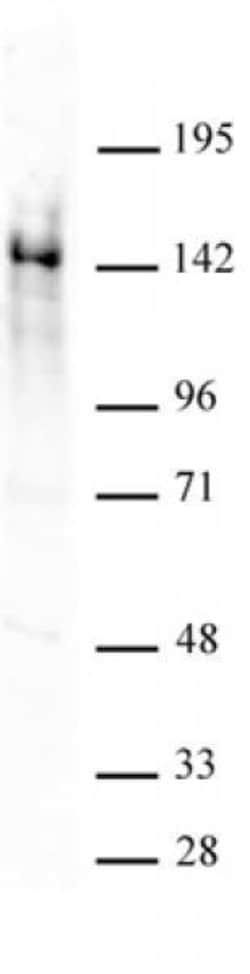
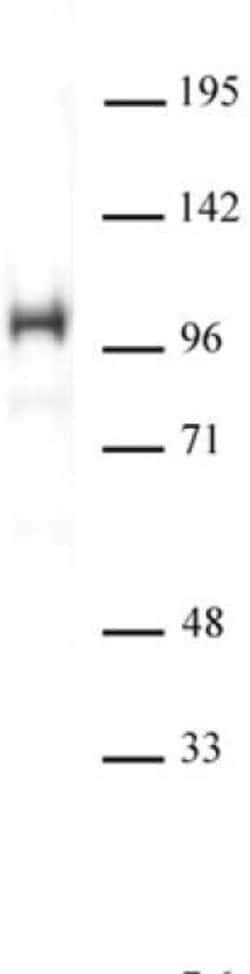
Lamin A, mature
Concentration
1 mg/mL
Classification
Monoclonal
Form
Liquid
Regulatory Status
RUO
Formulation
70mM tris with 0.07mM EDTA, 105mM NaCl, 30% glycerol, 31mM glycine and 0.035% sodium azide; pH 8
Gene Alias
70 kDa lamin; BOS_2775; CDCD1; CDDC; CMD1A; CMT2B1; Dhe; EMD2; FPL; FPLD; FPLD2; HGPS; IDC; lamin; lamin A; lamin A/C; lamin A/C-like 1; lamin C; lamin C2; Lamin-A/C; LDP1; LFP; LGMD1B; Lmn1; LMNA; LMNC; LMNL1; OTTHUMP00000015843; OTTHUMP00000015846; OTTHUMP00000015847; Prelamin-A/C; PRO1; Renal carcinoma antigen NY-REN-32
Gene Symbols
LMNA
Isotype
IgG1
Purification Method
Protein G
Product Type
Antibody
Clone
4A4
Applications
Western Blot
Conjugate
Unconjugated
Host Species
Mouse
Target Species
Human
Gene Accession No.
P02545
Gene ID (Entrez)
4000
Immunogen
This Lamin A, mature antibody was raised against a peptide within the C-terminus of mature human Lamin A.
Primary or Secondary
Primary
Content And Storage
-20°C, Avoid Freeze/Thaw Cycles
Gene
LMNA
Related Products




Description
- Nuclear lamins form a network of intermediate-type filaments at the nucleoplasmic site of the nuclear membrane
- Two main subtypes of nuclear lamins can be distinguished, i.e
- A-type lamins and B-type lamins
- The A-type lamins comprise a set of three proteins arising from the same gene by alternative splicing, i.e
- lamin A, lamin C and lamin Adel 10, while the B-type lamins include two proteins arising from two distinct genes, i.e
- lamin B1 and lamin B2
- Recent evidence has revealed that mutations in A-type lamins give rise to a range of rare but dominant genetic disorders, including Emery-Dreifuss muscular dystrophy, dilated cardiomyopathy with conduction-system disease and Dunnigan-type familial partial lipodystrophy
- In addition, the expression of A-type lamins coincides with cell differentiation and as A-type lamins specifically interact with chromatin, a role in the regulation of differential gene expression has been suggested for A-type lamins.