7192871
Tmem119 Monoclonal Antibody (V3RT1GOsz), Alexa Fluor™ 488, eBioscience™, Invitrogen™
Rat Monoclonal Antibody
Manufacturer: Fischer Scientific
The price for this product is unavailable. Please request a quote
Antigen
Tmem119
Concentration
0.5 mg/mL
Classification
Monoclonal
Form
Liquid
Regulatory Status
RUO
Formulation
PBS with 0.09% sodium azide; pH 7.2
Gene Alias
AW208946; BC025600; OBIF; Osteoblast induction factor; PSEC0199; Tmem119; Transmembrane protein 119; UNQ731/PRO1415
Gene Symbols
TMEM119
Isotype
IgG2a κ
Purification Method
Affinity chromatography
Product Type
Antibody
Clone
V3RT1GOsz
Applications
Flow Cytometry
Conjugate
Alexa Fluor 488
Host Species
Rat
Target Species
Mouse
Gene Accession No.
Q8R138
Gene ID (Entrez)
231633
Immunogen
cell surface peptide
Primary or Secondary
Primary
Content And Storage
4° C, store in dark, DO NOT FREEZE!
Gene
TMEM119
Related Products


Description
- Description: This V3RT1GOsz monoclonal antibody recognizes mouse Tmem119
- This clone has been reported to be successfully used in flow cytometry
- Applications Reported: This V3RT1GOsz antibody has been reported for use in flow cytometric analysis
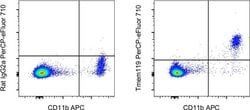
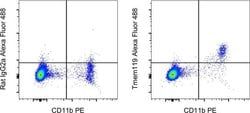
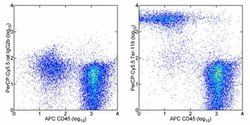
- Applications Tested: This V3RT1GOsz antibody has been tested by flow cytometric analysis of mouse brain cells after myelin removal
- This may be used at less than or equal to 1.0 μg per test
- A test is defined as the amount (μg) of antibody that will stain a cell sample in a final volume of 100 μL
- Cell number should be determined empirically but can range from 10^5 to 10^8 cells/test
- It is recommended that the antibody be carefully titrated for optimal performance in the assay of interest
- Excitation: 488 nm; Emission: 519 nm; Laser: Blue Laser Tmem119 encodes a single-pass type I transmembrane protein which seems to interact with a multitude of micro-RNAs as well as certain transcription factors such as SMAD1, SMAD5 and RUNX2
- Tmem119 has been identified as a surface marker of microglia that can be used to reliably distinguish microglia from infiltrating macrophages
- Microglial cells are phagocytes that are restricted to the brain and involved in clearing up debris and dendrite pruning of neurons
- They display a high functional plasticity, balancing neuroprotective and neurotoxic functions, which is reflected by their distinct physiology in response to changes in their microenvironment
- Microglia are particularly mobile in areas of the brain undergoing restructuring
- Reactive microglia co-express the marker Iba1
- In a pathological context, microglia have been associated with differentiation of pathogenic/inflammatory A1 type astrocytes by secretion of Cq1, IL-1a and TNF when stimulated with LPS, and thought to contribute to the pathology of several neurodegenerative diseases such as Alzheimers, Parkinsons, Chorea Huntingtons disease and Multiple Sclerosis
- The specific function Tmem119 plays on microglial cells remains unclear
- Outside of the neural system, Tmem119 seems to be involved in osteoblast differentiation/ossification.