SRY Polyclonal Antibody, Invitrogen™
Rabbit Polyclonal Antibody
Manufacturer: Fischer Scientific
The price for this product is unavailable. Please request a quote
Antigen
SRY
Applications
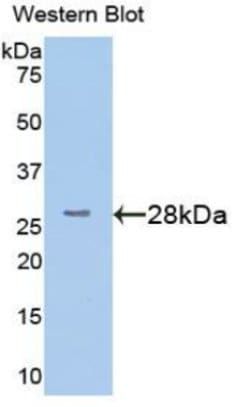
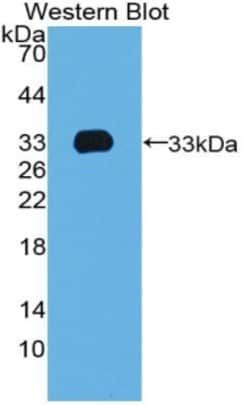
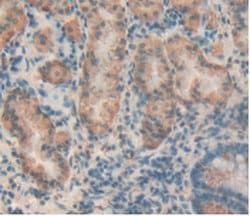
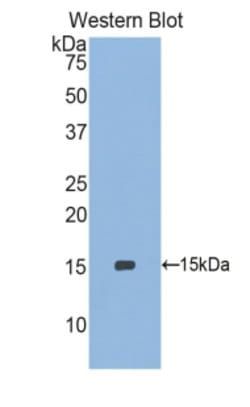
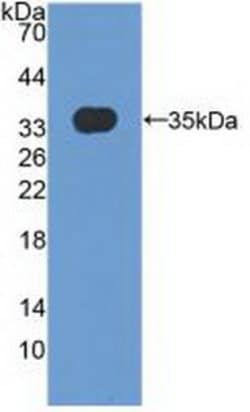
Immunohistochemistry (Paraffin), Western Blot
Conjugate
Unconjugated
Host Species
Rabbit
Target Species
Human
Gene Accession No.
Q05066
Gene ID (Entrez)
6736
Immunogen
Met1-Leu204 (Accession Q05066), with N-terminal His Tag
Primary or Secondary
Primary
Content And Storage
-20°C
Gene
SRY
Concentration
0.55 mg/mL
Classification
Polyclonal
Form
Liquid
Regulatory Status
RUO
Formulation
PBS with 50% glycerol and 0.05% ProClin 300
Gene Alias
essential protein for sex determination in human males; HMG box transcription factor Sry1; HMG box transcription factor Sry3BI; sex determining region of Chr Y; sex determining region on Y; sex determining region Y; sex determining region Y protein; sex-determining region on Y; sex-determining region Y protein; SRXX1; SRXY1; Sry; Sry1; Sry3BI; SRYGENE; TDF; TDY; Testis determining locus; testis determining-Y; testis-determining factor; testis-determining factor on Y
Gene Symbols
SRY
Isotype
IgG
Purification Method
Antigen affinity chromatography
Product Type
Antibody
Related Products

Description
- This intronless gene encodes a transcription factor that is a member of the high mobility group (HMG)-box family of DNA-binding proteins
- This protein is the testis-determining factor (TDF), which initiates male sex determination
- Mutations in this gene give rise to XY females with gonadal dysgenesis (Swyer syndrome); translocation of part of the Y chromosome containing this gene to the X chromosome causes XX male syndrome.