7240888
MSRB1 Polyclonal Antibody, Invitrogen™
Rabbit Polyclonal Antibody
Manufacturer: Fischer Scientific
The price for this product is unavailable. Please request a quote
Antigen
MSRB1
Applications
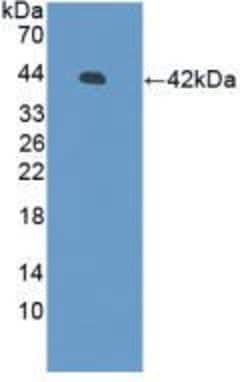
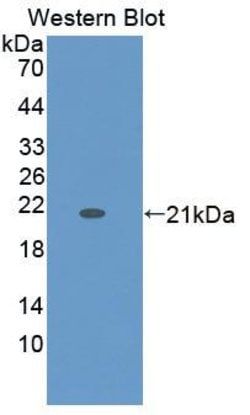
Western Blot
Conjugate
Unconjugated
Host Species
Rabbit
Target Species
Human
Gene Accession No.
Q9NZV6
Gene ID (Entrez)
51734
Immunogen
Met1-His116 (Accession Q9NZV6), with N-terminal His Tag
Primary or Secondary
Primary
Content And Storage
-20°C
Gene
MSRB1
Concentration
0.5 mg/mL
Classification
Polyclonal
Form
Liquid
Regulatory Status
RUO
Formulation
PBS with 50% glycerol and 0.05% ProClin 300
Gene Alias
D17Wsu82e; HSPC270; methionine sulfoxide red. domain; methionine sulfoxide reductase b; methionine sulfoxide reductase B1; methionine-R-sulfoxide reductase B1; MGC3344; MsrB1; Selenoprotein R; Selenoprotein X; selenoprotein X 1; selenoprotein X, 1; SelR; SELX; Sepr; Sepx1
Gene Symbols
MSRB1
Isotype
IgG
Purification Method
Antigen affinity chromatography
Product Type
Antibody
Related Products
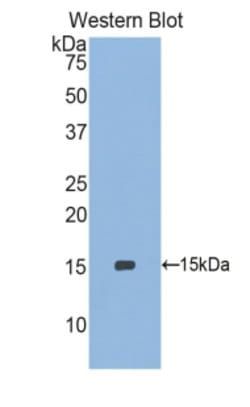
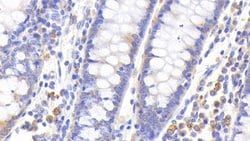
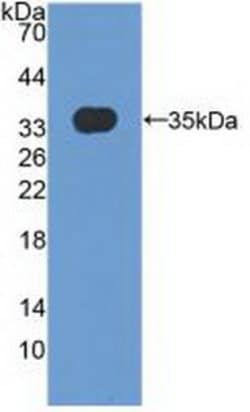
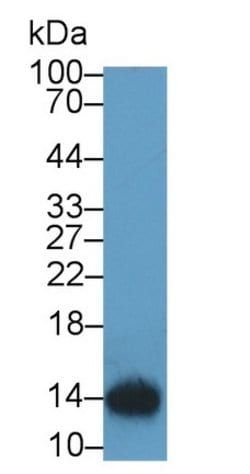
Description
- This gene encodes a selenoprotein, which contains a selenocysteine (Sec) residue at its active site
- The selenocysteine is encoded by the UGA codon that normally signals translation termination
- The 3' UTR of selenoprotein genes have a common stem-loop structure, the sec insertion sequence (SECIS), that is necessary for the recognition of UGA as a Sec codon rather than as a stop signal
- This protein belongs to the methionine sulfoxide reductase B (MsrB) family, and it is expressed in a variety of adult and fetal tissues.