89-110-583
CD36, Mouse, Clone: NF189, Abnova™
Manufacturer: Abnova Corporation
Select a Size
| Pack Size | SKU | Availability | Price |
|---|---|---|---|
| Each of 1 | 89-110-583-Each-of-1 | In Stock | ₹ 70,043.00 |
89-110-583 - Each of 1
In Stock
Quantity
1
Base Price: ₹ 70,043.00
GST (18%): ₹ 12,607.74
Total Price: ₹ 82,650.74
Antigen
CD36
Classification
Monoclonal
Conjugate
Unconjugated
Dilution
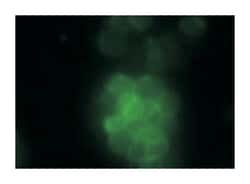
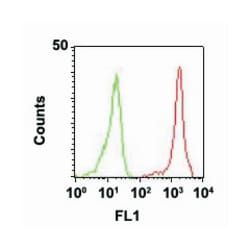
Flow Cytometry (0.5-20 ug/mL) The optimal working dilution should be determined by the end user.
Gene
CD36
Gene Symbols
CD36
Immunogen
Native purified human CD36.
Regulatory Status
RUO
Gene ID (Entrez)
948
Form
Liquid
Applications
Flow Cytometry
Clone
NF189
Description
Mouse monoclonal antibody raised against native CD36.
Formulation
In PBS (0.1% proclin, 2.0% Block Ace)
Gene Alias
CHDS7/FAT/GP3B/GP4/GPIV/PASIV/SCARB3
Host Species
Mouse
Quantity
50 μg
Primary or Secondary
Primary
Content And Storage
Store at -20°C.Aliquot to avoid repeated freezing and thawing.
Isotype
IgG1
Related Products

Description
- The protein encoded by this gene is the fourth major glycoprotein of the platelet surface and serves as a receptor for thrombospondin in platelets and various cell lines
- Since thrombospondins are widely distributed proteins involved in a variety of adhesive processes, this protein may have important functions as a cell adhesion molecule
- It binds to collagen, thrombospondin, anionic phospholipids and oxidized LDL
- It directly mediates cytoadherence of Plasmodium falciparum parasitized erythrocytes and it binds long chain fatty acids and may function in the transport and/or as a regulator of fatty acid transport
- Mutations in this gene cause platelet glycoprotein deficiency
- Multiple alternatively spliced transcript variants encoding the same protein have been found for this gene
- [provided by RefSeq