FADD, Mouse, Clone: T1B, Abnova™
Manufacturer: Abnova Corporation
Select a Size
| Pack Size | SKU | Availability | Price |
|---|---|---|---|
| Each of 1 | 89-110-606-Each-of-1 | In Stock | ₹ 70,488.00 |
89-110-606 - Each of 1
In Stock
Quantity
1
Base Price: ₹ 70,488.00
GST (18%): ₹ 12,687.84
Total Price: ₹ 83,175.84
Antigen
FADD
Classification
Monoclonal
Conjugate
Unconjugated
Dilution
Western Blot (1-4 ug/mL) The optimal working dilution should be determined by the end user.
Gene
FADD
Gene Symbols
FADD
Immunogen
Recombinant protein corresponding to human FADD.
Regulatory Status
RUO
Gene ID (Entrez)
8772
Content And Storage
Store at -20°C. For long term storage store at -80°C.Aliquot to avoid repeated freezing and thawing.
Isotype
IgG1
Applications
Immunofluorescence, Western Blot
Clone
T1B
Description
Mouse monoclonal antibody raised against recombinant FADD.
Formulation
In PBS (30% glycerol, 0.5% BSA, 0.01% thimerosal)
Gene Alias
GIG3/MGC8528/MORT1
Host Species
Mouse
Quantity
100 μg
Primary or Secondary
Primary
Test Specificity
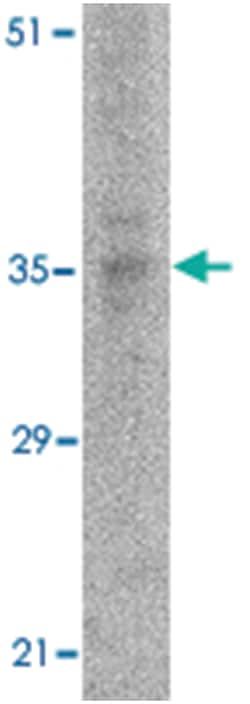
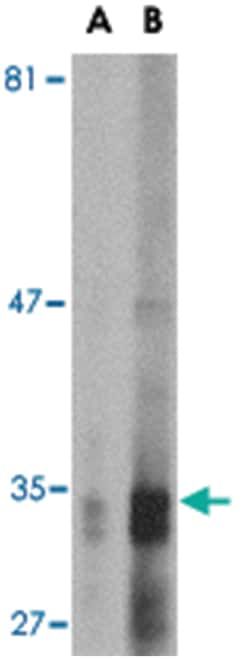
This antibody detects 28 KDa protein, corresponding to the apparent molecular weight of FADD in SDS-PAGE immunoblots from samples of human and mouse origins.
Form
Liquid
Related Products

Description
- The protein encoded by this gene is an adaptor molecule that interacts with various cell surface receptors and mediates cell apoptotic signals
- Through its C-terminal death domain, this protein can be recruited by TNFRSF6/Fas-receptor, tumor necrosis factor receptor, TNFRSF25, and TNFSF10/TRAIL-receptor, and thus it participates in the death signaling initiated by these receptors
- Interaction of this protein with the receptors unmasks the N-terminal effector domain of this protein, which allows it to recruit caspase-8, and thereby activate the cysteine protease cascade
- Knockout studies in mice also suggest the importance of this protein in early T cell development
- [provided by RefSeq