ABL1 (phospho Y204), Rabbit anti-Human, Mouse, Rat, Polyclonal Antibody, Abnova™
Manufacturer: Abnova Corporation
Select a Size
| Pack Size | SKU | Availability | Price |
|---|---|---|---|
| Each of 1 | 89-118-762-Each-of-1 | In Stock | ₹ 57,138.00 |
89-118-762 - Each of 1
In Stock
Quantity
1
Base Price: ₹ 57,138.00
GST (18%): ₹ 10,284.84
Total Price: ₹ 67,422.84
Antigen
ABL1
Classification
Polyclonal
Description
Rabbit polyclonal antibody raised against synthetic phosphopeptide of ABL1.
Formulation
In 20mM PBS, 0.15M NaCl, pH 7.2 (0.01% sodium azide)
Gene Accession No.
P00519
Gene Symbols
ABL1
Immunogen
Synthetic phosphopeptide corresponding to residues surrounding Y204 of human ABL1.
Regulatory Status
RUO
Gene ID (Entrez)
25
Target Species
Human, Mouse, Rat
Form
Liquid
Applications
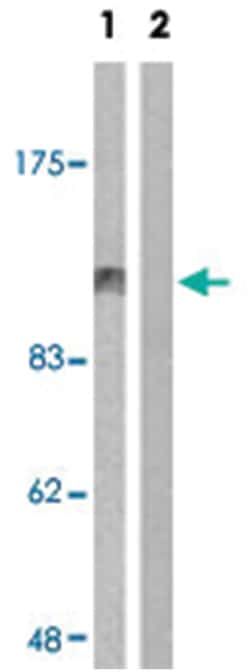
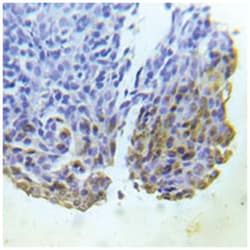
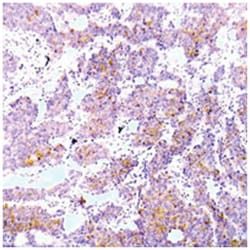
ELISA, Immunohistochemistry (PFA fixed), Western Blot
Conjugate
Unconjugated
Dilution
Western Blot (1:500-1:1000) Immunohistochemistry (1:50-1:100) ELISA (1:4000) The optimal working dilution should be determined by the end user.
Gene
ABL1
Gene Alias
ABL/JTK7/bcr/abl/c-ABL/p150/v-abl
Host Species
Rabbit
Quantity
100 μg
Primary or Secondary
Primary
Test Specificity
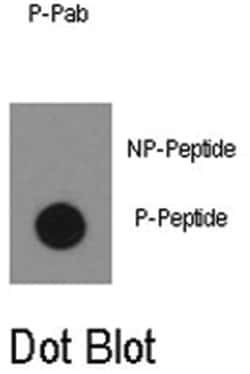
This antibody detects endogenous levels of ABL1 only when phosphorylated at tyrosine 204.
Content And Storage
Store at 4°C for three months. For long term storage store at -20°C.Aliquot to avoid repeated freezing and thawing.
Related Products


Description
- The ABL1 protooncogene encodes a cytoplasmic and nuclear protein tyrosine kinase that has been implicated in processes of cell differentiation, cell division, cell adhesion, and stress response
- Activity of c-Abl protein is negatively regulated by its SH3 domain, and deletion of the SH3 domain turns ABL1 into an oncogene
- The t(9;22) translocation results in the head-to-tail fusion of the BCR (MIM:151410) and ABL1 genes present in many cases of chronic myelogeneous leukemia
- The DNA-binding activity of the ubiquitously expressed ABL1 tyrosine kinase is regulated by CDC2-mediated phosphorylation, suggesting a cell cycle function for ABL1
- The ABL1 gene is expressed as either a 6- or 7kb mRNA transcript, with alternatively spliced first exons spliced to the common exons 2-11
- [provided by RefSeq