BCL2 Rabbit anti-Human, Polyclonal Antibody, Abnova™
Manufacturer: Abnova Corporation
Select a Size
| Pack Size | SKU | Availability | Price |
|---|---|---|---|
| Each of 1 | 89-126-112-Each-of-1 | In Stock | ₹ 53,133.00 |
89-126-112 - Each of 1
In Stock
Quantity
1
Base Price: ₹ 53,133.00
GST (18%): ₹ 9,563.94
Total Price: ₹ 62,696.94
Antigen
BCL2
Classification
Polyclonal
Description
Rabbit polyclonal antibody raised against synthetic peptide of BCL2.
Formulation
In PBS (0.09% sodium azide)
Gene Accession No.
NP_000624;P10415
Gene Symbols
BCL2
Immunogen
A synthetic peptide (conjugated with KLH) corresponding to the BH3 domain of human BCL2.
Quantity
400 μL
Primary or Secondary
Primary
Test Specificity
BH3 Domain Specific
Content And Storage
Store at 4°C. For long term storage store at -20°C.Aliquot to avoid repeated freezing and thawing.
Applications
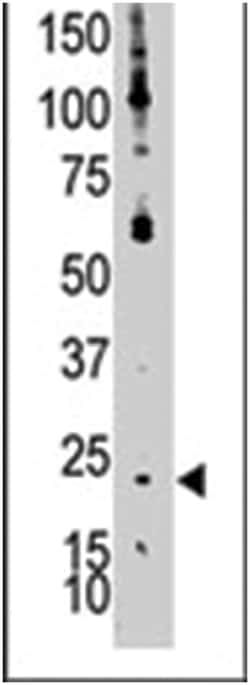
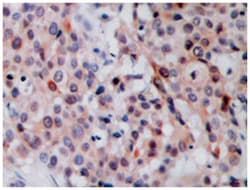
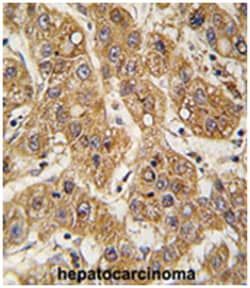
ELISA, Flow Cytometry, Immunohistochemistry, Immunoprecipitation, Western Blot
Conjugate
Unconjugated
Dilution
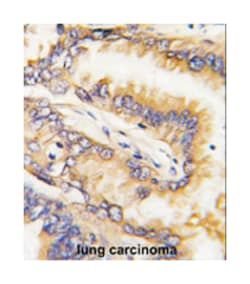
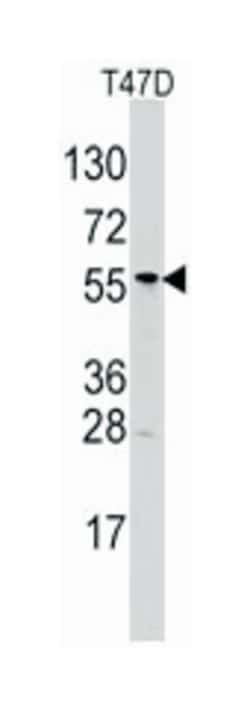
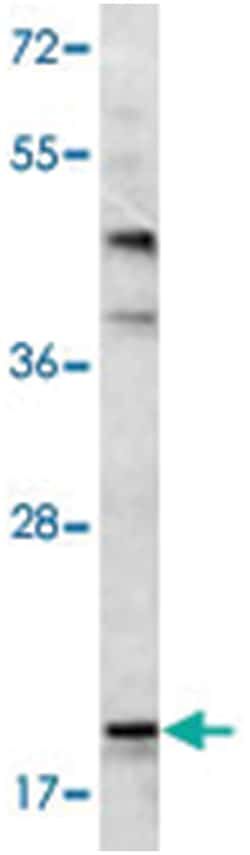
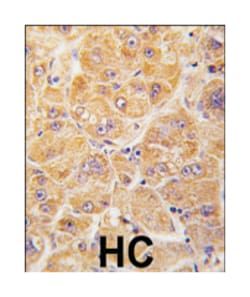
Western Blot (1:1000) Immunohistochemistry (1:10-50) Immunoprecipitation (1:100-500) Flow cytometry (1:100-500) The optimal working dilution should be determined by the end user.
Gene
BCL2
Gene Alias
Bcl-2
Host Species
Rabbit
Purification Method
Protein G purification
Regulatory Status
RUO
Gene ID (Entrez)
596
Target Species
Human
Form
Liquid
Related Products

Description
- This gene encodes an integral outer mitochondrial membrane protein that blocks the apoptotic death of some cells such as lymphocytes
- Constitutive expression of BCL2, such as in the case of translocation of BCL2 to Ig heavy chain locus, is thought to be the cause of follicular lymphoma
- Two transcript variants, produced by alternate splicing, differ in their C-terminal ends
- [provided by RefSeq