BAX (phospho T167), Rabbit anti-Human, Polyclonal Antibody, Abnova™
Manufacturer: Abnova Corporation
Select a Size
| Pack Size | SKU | Availability | Price |
|---|---|---|---|
| Each of 1 | 89-130-709-Each-of-1 | In Stock | ₹ 57,138.00 |
89-130-709 - Each of 1
In Stock
Quantity
1
Base Price: ₹ 57,138.00
GST (18%): ₹ 10,284.84
Total Price: ₹ 67,422.84
Antigen
BAX
Classification
Polyclonal
Description
Rabbit polyclonal antibody raised against synthetic phosphopeptide of human BAX.
Formulation
In PBS (without mg2+and Ca2+), 150mM NaCl, pH 7.4 (50% glycerol, 0.02% sodium azide)
Gene Accession No.
Q07812
Gene Symbols
BAX
Immunogen
Synthetic phosphopeptide (conjugated with KLH) corresponding to residues surrounding T167 of human BAX.
Quantity
100 μL
Primary or Secondary
Primary
Test Specificity
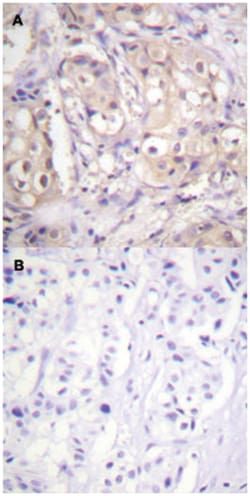
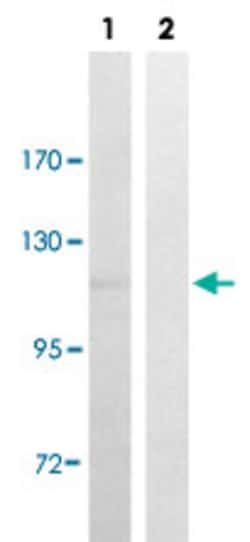
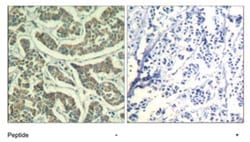
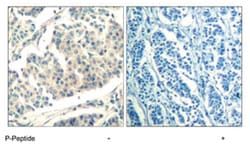
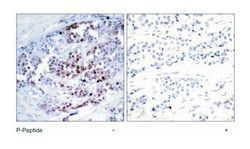
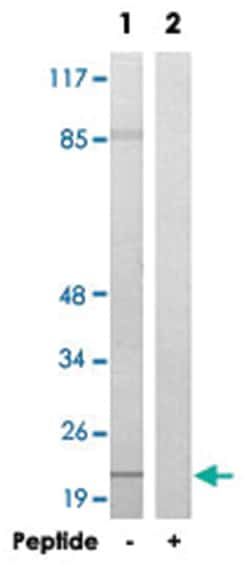
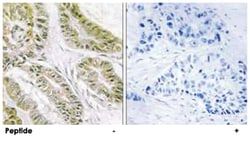
BAX (phospho T167) polyclonal antibody detects endogenous levels of human BAX only when phosphorylated at threonine 167.
Content And Storage
Store at -20°C.Aliquot to avoid repeated freezing and thawing.
Applications
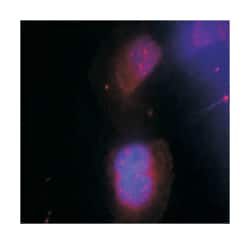
Immunofluorescence
Conjugate
Unconjugated
Dilution
Immunofluorescence (1:100∼1:200) The optimal working dilution should be determined by the end user.
Gene
BAX
Gene Alias
BCL2L4
Host Species
Rabbit
Purification Method
Affinity Chromatography
Regulatory Status
RUO
Gene ID (Entrez)
581
Target Species
Human
Form
Liquid
Related Products
Description
- The protein encoded by this gene belongs to the BCL2 protein family
- BCL2 family members form hetero- or homodimers and act as anti- or pro-apoptotic regulators that are involved in a wide variety of cellular activities
- This protein forms a heterodimer with BCL2, and functions as an apoptotic activator
- This protein is reported to interact with, and increase the opening of, the mitochondrial voltage-dependent anion channel (VDAC), which leads to the loss in membrane potential and the release of cytochrome c
- The expression of this gene is regulated by the tumor suppressor P53 and has been shown to be involved in P53-mediated apoptosis
- Multiple alternatively spliced transcript variants, which encode different isoforms, have been reported for this gene
- [provided by RefSeq