PER2 (phospho S662) Rabbit anti-Human, Mouse, Polyclonal , Abnova™
Manufacturer: Abnova Corporation
Select a Size
| Pack Size | SKU | Availability | Price |
|---|---|---|---|
| Each of 1 | 89-956-779-Each-of-1 | In Stock | ₹ 55,803.00 |
89-956-779 - Each of 1
In Stock
Quantity
1
Base Price: ₹ 55,803.00
GST (18%): ₹ 10,044.54
Total Price: ₹ 65,847.54
Antigen
PER2 (phospho S662)
Classification
Polyclonal
Description
Rabbit polyclonal antibody raised against synthetic phosphopeptide of human PER2.
Formulation
In PBS (without Mg2+and Ca2+), 150 mM NaCl, pH 7.4 (50% glycerol, 0.02% sodium azide)
Gene Symbols
PER2
Immunogen
Synthetic phosphopeptide (conjugated with KLH) corresponding to residues surrounding S662 of human PER2.
Quantity
100 μL
Primary or Secondary
Primary
Test Specificity
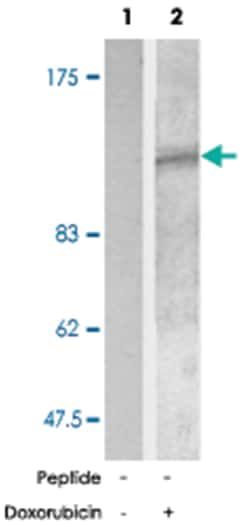
PER2 (phospho S662) polyclonal antibody detects endogenous levels of human PER2 only when phosphorylated at serine 662.
Content And Storage
Store at -20°C.Aliquot to avoid repeated freezing and thawing.
Applications
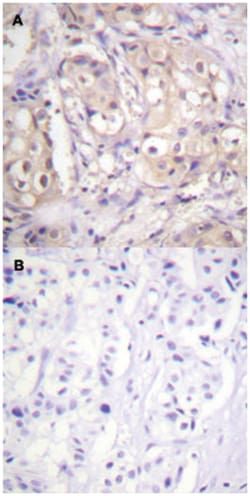
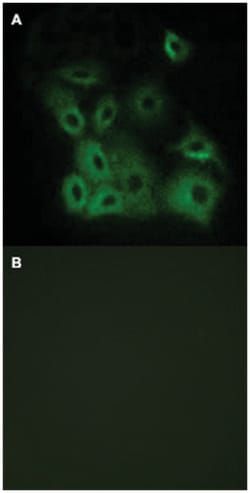
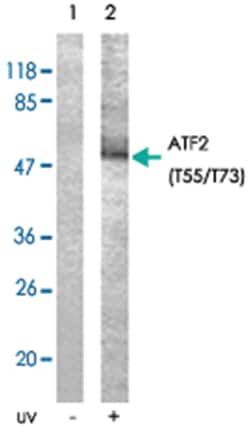
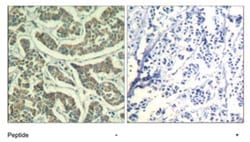
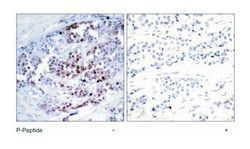
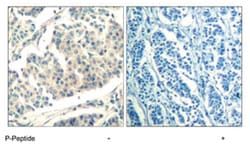
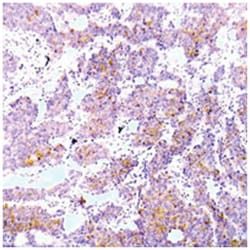
Immunohistochemistry (PFA fixed), Western Blot
Conjugate
Unconjugated
Dilution
Immunohistochemistry (1:50-1:100) Western Blot (1:500-1:3000) The optimal working dilution should be determined by the end user.
Gene Alias
FASPS/KIAA0347
Host Species
Rabbit
Purification Method
Affinity chromatography
Regulatory Status
RUO
Gene ID (Entrez)
8864
Target Species
Human, Mouse
Form
Liquid
Related Products
Description
- This gene is a member of the Period family of genes and is expressed in a circadian pattern in the suprachiasmatic nucleus, the primary circadian pacemaker in the mammalian brain
- Genes in this family encode components of the circadian rhythms of locomotor activity, metabolism, and behavior
- Circadian expression in the suprachiasmatic nucleus continues in constant darkness, and a shift in the light/dark cycle evokes a proportional shift of gene expression in the suprachiasmatic nucleus
- The specific function of this gene is not yet known
- [provided by RefSeq]