BRAF (phospho T599), Rabbit anti-Human, Mouse, Rat, Polyclonal Antibody, Abnova™
Manufacturer: Abnova Corporation
Select a Size
| Pack Size | SKU | Availability | Price |
|---|---|---|---|
| Each of 1 | 89-130-711-Each-of-1 | In Stock | ₹ 57,138.00 |
89-130-711 - Each of 1
In Stock
Quantity
1
Base Price: ₹ 57,138.00
GST (18%): ₹ 10,284.84
Total Price: ₹ 67,422.84
Antigen
BRAF
Classification
Polyclonal
Description
Rabbit polyclonal antibody raised against synthetic phosphopeptide of human BRAF.
Formulation
In PBS (without mg2+and Ca2+), 150mM NaCl, pH 7.4 (50% glycerol, 0.02% sodium azide)
Gene Accession No.
P15056
Gene Symbols
BRAF
Immunogen
Synthetic phosphopeptide (conjugated with KLH) corresponding to residues surrounding T599 of human BRAF.
Quantity
100 μL
Primary or Secondary
Primary
Test Specificity
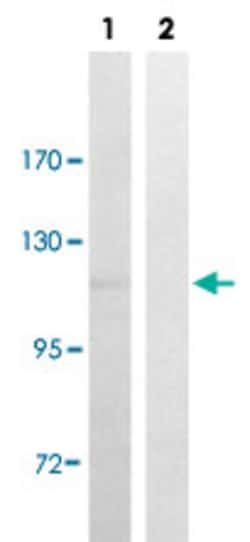
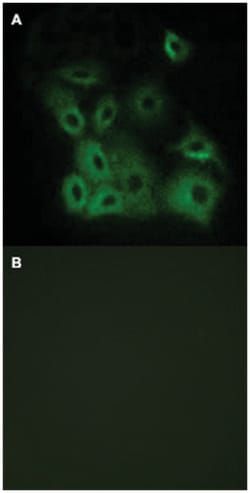
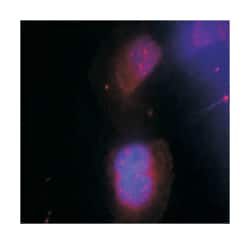
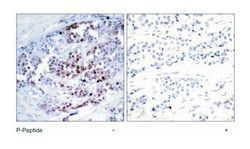
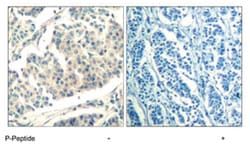
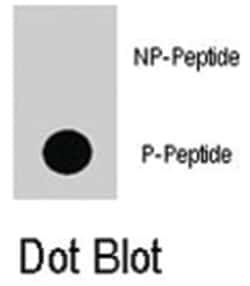
BRAF (phospho T599) polyclonal antibody detects endogenous levels of human BRAF only when phosphorylated at threonine 599.
Content And Storage
Store at -20°C.Aliquot to avoid repeated freezing and thawing.
Applications
Immunohistochemistry (PFA fixed)
Conjugate
Unconjugated
Dilution
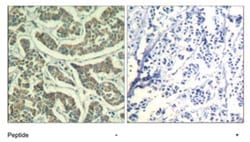
Immunohistochemistry (1:50∼1:100) The optimal working dilution should be determined by the end user.
Gene
BRAF
Gene Alias
B-RAF1/BRAF1/FLJ95109/MGC126806/MGC138284/RAFB1
Host Species
Rabbit
Purification Method
Affinity Chromatography
Regulatory Status
RUO
Gene ID (Entrez)
673
Target Species
Human, Mouse, Rat
Form
Liquid
Related Products
Description
- This gene encodes a protein belonging to the raf/mil family of serine/threonine protein kinases
- This protein plays a role in regulating the MAP kinase/ERKs signaling pathway, which affects cell division, differentiation, and secretion
- Mutations in this gene are associated with cardiofaciocutaneous syndrome, a disease characterized by heart defects, mental retardation and a distinctive facial appearance
- Mutations in this gene have also been associated with various cancers, including non-Hodgkin lymphoma, colorectal cancer, malignant melanoma, thyroid carcinoma, nonsmall cell lung carcinoma, and adenocarcinoma of lung
- A pseudogene, which is located on chromosome X, has been identified for this gene
- [provided by RefSeq