CASP1 Mouse anti-Human, Clone: 14F468, Abnova™
Manufacturer: Abnova Corporation
Select a Size
| Pack Size | SKU | Availability | Price |
|---|---|---|---|
| Each of 1 | 89-933-722-Each-of-1 | In Stock | ₹ 85,173.00 |
89-933-722 - Each of 1
In Stock
Quantity
1
Base Price: ₹ 85,173.00
GST (18%): ₹ 15,331.14
Total Price: ₹ 1,00,504.14
Antigen
CASP1
Classification
Monoclonal
Conjugate
Unconjugated
Dilution
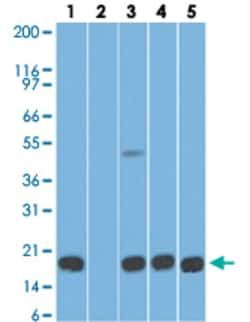
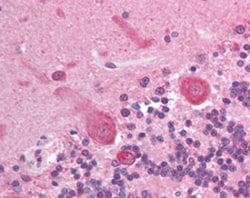
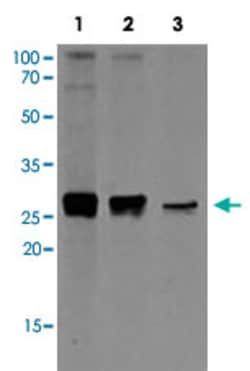
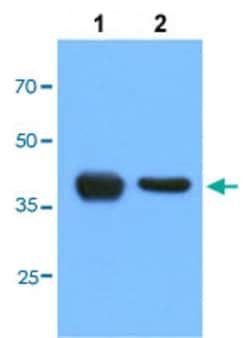
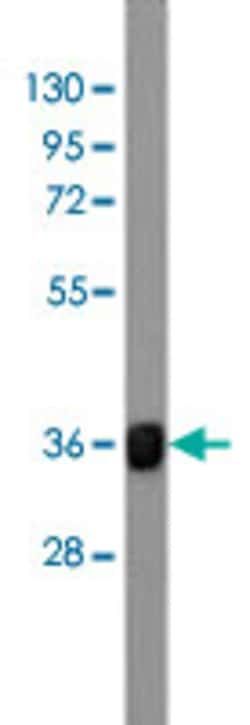
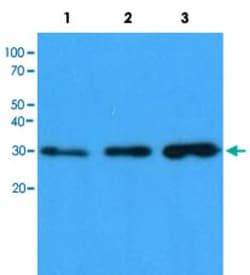
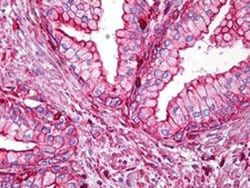
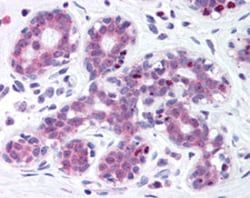
Immunohistochemistry (Formalin/PFA-fixed paraffin-embedded sections) (20 ug/mL) Western Blot (0.5-2 ug/mL) The optimal working dilution should be determined by the end user.
Gene Alias
ICE/IL1BC/P45
Host Species
Mouse
Purification Method
Protein G purification
Regulatory Status
RUO
Gene ID (Entrez)
834
Content And Storage
Store at 4°C. For long term storage store at -20°C.Aliquot to avoid repeated freezing and thawing.
Isotype
IgG1 κ
Applications
Immunohistochemistry (PFA fixed), Western Blot
Clone
14F468
Description
Mouse monoclonal antibody raised against human CASP1.
Formulation
In PBS (0.05% BSA, 0.05% sodium azide).
Gene Symbols
CASP1
Immunogen
A synthetic peptide corresponding to amino acids 371-390 of human CASP1.
Quantity
50 μg
Primary or Secondary
Primary
Target Species
Human
Form
Liquid
Related Products
Description
- This gene encodes a protein which is a member of the cysteine-aspartic acid protease (caspase) family
- Sequential activation of caspases plays a central role in the execution-phase of cell apoptosis
- Caspases exist as inactive proenzymes which undergo proteolytic processing at conserved aspartic residues to produce 2 subunits, large and small, that dimerize to form the active enzyme
- This gene was identified by its ability to proteolytically cleave and activate the inactive precursor of interleukin-1, a cytokine involved in the processes such as inflammation, septic shock, and wound healing
- This gene has been shown to induce cell apoptosis and may function in various developmental stages
- Studies of a similar gene in mouse suggest a role in the pathogenesis of Huntington disease
- Alternative splicing of this gene results in five transcript variants encoding distinct isoforms
- [provided by RefSeq] Sequence: RKVRFSFEQPDGRAQMPTTE