BDB610194
α-Catenin Mouse, Unlabeled, Clone: 5, BD
Manufacturer: Fischer Scientific
Select a Size
| Pack Size | SKU | Availability | Price |
|---|---|---|---|
| Each of 1 | BDB610194-Each-of-1 | In Stock | ₹ 46,814.00 |
BDB610194 - Each of 1
In Stock
Quantity
1
Base Price: ₹ 46,814.00
GST (18%): ₹ 8,426.52
Total Price: ₹ 55,240.52
Antigen
α-Catenin
Classification
Monoclonal
Concentration
250μg/mL
Formulation
Aqueous buffered solution containing BSA, glycerol, and ≤0.09% sodium azide.
Immunogen
Mouse α-Catenin aa. 729-906
Quantity
150 μg
Research Discipline
Cell Biology
Target Species
Canine, Chicken, Human, Mouse, Rat
Isotype
IgG1
Applications
Western Blot
Clone
5
Conjugate
Unconjugated
Host Species
Mouse
Purification Method
Affinity Purified
Regulatory Status
RUO
Primary or Secondary
Primary
Content And Storage
Store undiluted at -20°C.
Related Products

Description
- The catenins (α-, β-, and γ-) are cytoplasmic proteins that bind to the highly conserved cytoplasmic tail of E-Cadherin
- The cadherins, transmembrane adhesion molecules, are found with catenins at adherens junctions (zonula adherens)
- These junctions are critical for cell-cell adhesion, signal transmission between neighboring cells, and for the anchoring of the actin cytoskeleton
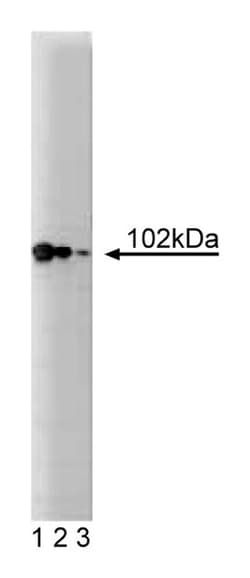
- α-Catenin (CAP102) shows homology to vinculin, while β-Catenin is similar to plakoglobin or the Drosophila armadillo gene product
- α-Catenin was identified as an E-Cadherin-associated protein, however, it also appears to interact with other cadherin family members
- There are at least two subtypes of α-Catenin: αE-Catenin and αN-Catenin
- The predominant form is known as αE-Catenin
- It is ubiquitously expressed, but at low levels in the nervous system
- The expression of αN-Catenin is more restricted and this form predominates in the brain
- Increased tyrosine phosphorylation of adherens junction proteins can disrupt catenin-cadherin complexes, leading to changes in cell adhesion properties
- It has been noted that down-regulation of this group of proteins often precedes metastasis
- In fact, data suggests a correlation between deletions within the α-Catenin gene and the development of prostate cancer
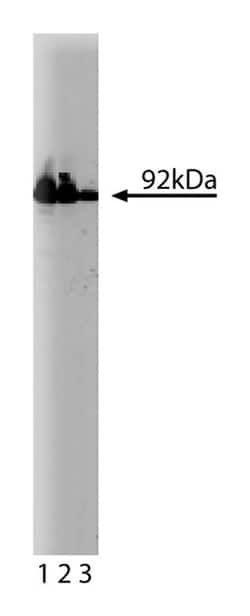
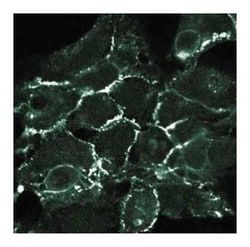
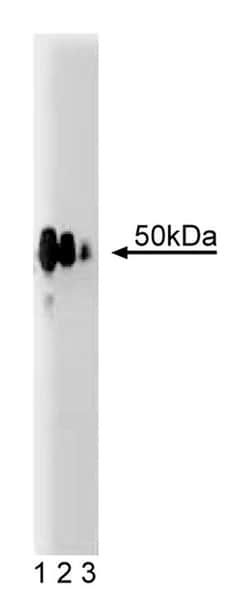
- Immunofluorescence, Immunohistochemistry, Immunoprecipitation, Western Blotting