BDB610921
N-Cadherin Mouse, Unlabeled, Clone: 32, BD
Manufacturer: Fischer Scientific
Select a Size
| Pack Size | SKU | Availability | Price |
|---|---|---|---|
| Each of 1 | BDB610921-Each-of-1 | In Stock | ₹ 50,374.00 |
BDB610921 - Each of 1
In Stock
Quantity
1
Base Price: ₹ 50,374.00
GST (18%): ₹ 9,067.32
Total Price: ₹ 59,441.32
Antigen
N-Cadherin
Classification
Monoclonal
Concentration
250μg/mL
Formulation
Aqueous buffered solution containing BSA, glycerol, and ≤0.09% sodium azide.
Immunogen
Mouse N-Cadherin aa. 802-819
Quantity
150 μg
Research Discipline
Cell Biology
Target Species
Chicken, Human, Mouse, Rat
Isotype
IgG1
Applications
Western Blot
Clone
32
Conjugate
Unconjugated
Host Species
Mouse
Purification Method
Affinity Purified
Regulatory Status
RUO
Primary or Secondary
Primary
Content And Storage
Store undiluted at -20°C.
Related Products

Description
- Cadherins are a family of Ca 2+ ;-dependent intercellular adhesion molecules that play a central role in controlling morphogenetic movements during development
- Their function is regulated by association with the actin cytoskeleton by a complex of cytoplasmic proteins called the catenins (α, β, γ)
- Members of the cadherin family include P-cadherin, E-cadherin (uvomorulin), N-cadherin (neural cadherin), R-cadherin, cadherin 5, L-CAM, and EP-cadherin
- N-cadherin mRNA is found at elevated levels in brain and heart and at a much lower level in liver
- Mechanisms such as mRNA expression, cytokine modulation, and protease-mediated turnover modulate N-cadherin protein levels during development
- In addition, N-cadherin function is indirectly regulated by endogenous kinases and phosphatases
- Tyrosine phosphorylation of β-catenin complexed with N-cadherin results in dissociation of N-cadherin from actin
- However, N-cadherin also interacts with a PTP1B-like phosphatase that dephosphorylates β-catenin and promotes N-cadherin/actin association
- Thus, N-cadherin is an integral adhesion molecule whose function is regulated by protein-protein interactions and phosphorylation/dephosphorylation events
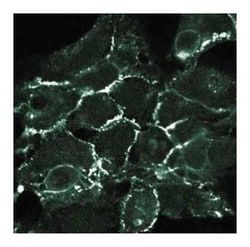
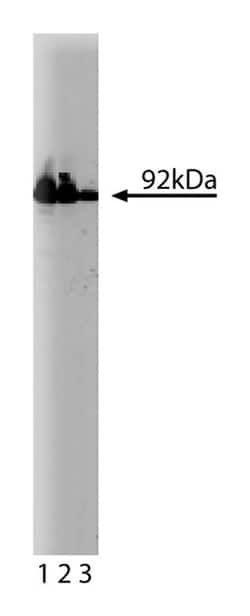
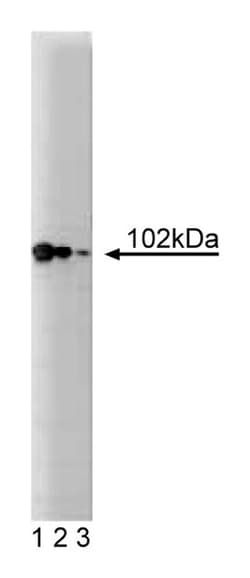
- Immunofluorescence, Western Blotting