Fibronectin Monoclonal Antibody (A17), Invitrogen™
Manufacturer: Thermo Scientific
Select a Size
| Pack Size | SKU | Availability | Price |
|---|---|---|---|
| Each of 1 | CSI0051702-Each-of-1 | In Stock | ₹ 84,105.00 |
CSI0051702 - Each of 1
In Stock
Quantity
1
Base Price: ₹ 84,105.00
GST (18%): ₹ 15,138.90
Total Price: ₹ 99,243.90
Antigen
Fibronectin
Classification
Monoclonal
Concentration
1 mg/mL
Formulation
PBS with 15mM sodium azide; pH 7.4
Gene Accession No.
P02751, P07589, P11722
Gene Symbols
FN1
Immunogen
Lysed bovine corneal endothelial cells and extracellular matrix.
Quantity
400 μL
Primary or Secondary
Primary
Target Species
Bovine, Chicken, Human
Product Type
Antibody
Isotype
IgG1 κ
Applications
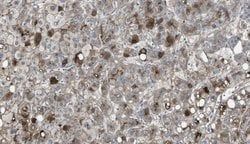
ELISA, Immunohistochemistry (Frozen), Immunohistochemistry (Paraffin), Immunoprecipitation, Western Blot
Clone
A17
Conjugate
Unconjugated
Gene
FN1
Gene Alias
Anastellin; CIG; Cold insoluble globulin (CIG); Cold-insoluble globulin; cumulus cell-specific fibronectin 1 transcript; DKFZp686F10164; DKFZp686H0342; DKFZp686I1370; DKFZp686O13149; E330027I09; ED-B; embryo-specific fibronectin 1 transcript; ferritin L subunit; ferritin L-chain; FIBNEC; fibronectin; fibronectin 1; fibronectin ED-A- region; fibronectin ED-B+ region; fibronectin variable region; FINC; FN; FN1; fn-1; FNZ; GFND; GFND2; LETS; LOW QUALITY PROTEIN: fibronectin; Migration stimulating factor (MSF); migration-stimulating factor; MSF; Ugl-Y1; Ugl-Y2; Ugl-Y3
Host Species
Mouse
Purification Method
Protein A
Regulatory Status
RUO
Gene ID (Entrez)
2335, 280794, 396133
Content And Storage
4° C, store in dark
Form
Liquid
Related Products


Description
- CSI 005-17-02 is highly specific for fibronectin
- There is no evidence for cross-reactivity with other connective tissue proteins (vitronectin, elastin, collagen, laminin)
- CSI 005-17-02 cross-reacts with human and chicken fibronectin
- Other species have not been tested
- CSI 005-17-02 has been successfully used in Western blottin, ELISA, Immunohistochemistry and Immunoprecipitation procedures
- The antibody inhibits integrin-mediated cell adhesion to the cell binding domain of fibronectin
- It can be used to probe fibronectin conformation
- Strong reaction is seen in ELISA with thrombospondin directly coated onto the microtiter well
- The specificity of the CSI 005-17-02 epitope is located in the 120 kDa cell binding fragment
- NOTE: Concentration is lot-dependent and can vary from 0.85-1.15 mg/mL Fibronectin is a disulfide-bonded dimer with a molecular weight range of 230-250 kDa
- In the extracellular matrix of several connective tissues and vessels, fibronectin is present as an insoluble protein that is extensively cross-linked by interchain disulfide bonds forming high molecular mass polymers
- Fibronectin is most abundant during embryonic development and tissue remodeling
- Fibronectin is also present at high concentrations as a soluble plasma protein
- Fibronectin is organized as a linear series of repeating modules which form domains for interaction with fibronectin itself, other matrix components (e.g
- collagen and heparin) and receptors on cells (e.g
- integrins)
- Fibronectin is present in a soluble dimeric form in plasma, and in a dimeric or multimeric form at the cell surface and in extracellular matrix
- Fibronectin is involved in cell adhesion and migration processes including embryogenesis, wound healing, blood coagulation, host defense, and metastasis
- Fibronectin has been implicated in carcinoma development in lung cancer
- Further, Fibronectin expression is increased especially in non-small cell lung carcinoma
- The adhesion of lung carcinoma cells to Fibronectin enhances tumorgenecity and confers resistance to apoptosis induced by standard chemotherapeutic agents
- The gene encoding Fibronectin has three regions subject to alternative splicing, with the potential to produce 20 different transcript variants
- However, the full-length nature of some Fibronectin variants has not been determined.