Fibronectin Monoclonal Antibody (A32), Invitrogen™
Manufacturer: Thermo Scientific
Select a Size
| Pack Size | SKU | Availability | Price |
|---|---|---|---|
| Each of 1 | CSI0053202-Each-of-1 | In Stock | ₹ 85,573.50 |
CSI0053202 - Each of 1
In Stock
Quantity
1
Base Price: ₹ 85,573.50
GST (18%): ₹ 15,403.23
Total Price: ₹ 1,00,976.73
Antigen
Fibronectin
Classification
Monoclonal
Concentration
1.12 mg/mL
Formulation
PBS with 15mM sodium azide; pH 7.4
Gene Accession No.
P02751, P07589
Gene Symbols
FN1
Immunogen
Bovine corneal endothelial cells.
Quantity
400 μL
Primary or Secondary
Primary
Target Species
Bovine, Human
Product Type
Antibody
Isotype
IgG1 κ
Applications
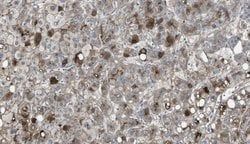
ELISA, Immunohistochemistry (Frozen), Immunoprecipitation, Western Blot
Clone
A32
Conjugate
Unconjugated
Gene
FN1
Gene Alias
Anastellin; CIG; Cold insoluble globulin (CIG); Cold-insoluble globulin; cumulus cell-specific fibronectin 1 transcript; DKFZp686F10164; DKFZp686H0342; DKFZp686I1370; DKFZp686O13149; E330027I09; ED-B; embryo-specific fibronectin 1 transcript; ferritin L subunit; ferritin L-chain; FIBNEC; fibronectin; fibronectin 1; fibronectin ED-A- region; fibronectin ED-B+ region; fibronectin variable region; FINC; FN; FN1; fn-1; FNZ; GFND; GFND2; LETS; LOW QUALITY PROTEIN: fibronectin; Migration stimulating factor (MSF); migration-stimulating factor; MSF; Ugl-Y1; Ugl-Y2; Ugl-Y3
Host Species
Mouse
Purification Method
Protein A
Regulatory Status
RUO
Gene ID (Entrez)
2335, 280794
Content And Storage
4° C, store in dark
Form
Liquid
Related Products


Description
- CSI 005-32-02 is highly specific for fibronectin
- There is no evidence for cross-reactivity with other connective tissue proteins (vitronectin, elastin, collagen, laminin)
- CSI 005-32-02 cross-reacts with human fibronectin
- Other species have not been tested
- CSI 005-32-02 has been successfully used in Western blotting, ELISA, Immunohistochemistry and Immunoprecipitation procedures
- The antibody inhibits cell adhesion to fibronectin mediated by the heparin-binding domain
- It can be used to probe fibronectin conformation and to quantitate plasma fibronectin in a sandwich ELISA
- NOTE: Concentration is lot-dependent and can vary from 0.85-1.15 mg/mL Fibronectin is a disulfide-bonded dimer with a molecular weight range of 230-250 kDa
- In the extracellular matrix of several connective tissues and vessels, fibronectin is present as an insoluble protein that is extensively cross-linked by interchain disulfide bonds forming high molecular mass polymers
- Fibronectin is most abundant during embryonic development and tissue remodeling
- Fibronectin is also present at high concentrations as a soluble plasma protein
- Fibronectin is organized as a linear series of repeating modules which form domains for interaction with fibronectin itself, other matrix components (e.g
- collagen and heparin) and receptors on cells (e.g
- integrins)
- Fibronectin is present in a soluble dimeric form in plasma, and in a dimeric or multimeric form at the cell surface and in extracellular matrix
- Fibronectin is involved in cell adhesion and migration processes including embryogenesis, wound healing, blood coagulation, host defense, and metastasis
- Fibronectin has been implicated in carcinoma development in lung cancer
- Further, Fibronectin expression is increased especially in non-small cell lung carcinoma
- The adhesion of lung carcinoma cells to Fibronectin enhances tumorgenecity and confers resistance to apoptosis induced by standard chemotherapeutic agents
- The gene encoding Fibronectin has three regions subject to alternative splicing, with the potential to produce 20 different transcript variants
- However, the full-length nature of some Fibronectin variants has not been determined.