Annexin A2 Recombinant Rabbit Monoclonal Antibody (10H9), Invitrogen™
Manufacturer: Thermo Scientific
Select a Size
| Pack Size | SKU | Availability | Price |
|---|---|---|---|
| Each of 1 | FEMA550047-Each-of-1 | In Stock | ₹ 37,202.00 |
FEMA550047 - Each of 1
In Stock
Quantity
1
Base Price: ₹ 37,202.00
GST (18%): ₹ 6,696.36
Total Price: ₹ 43,898.36
Antigen
Annexin A2
Classification
Recombinant Monoclonal
Concentration
0.33 mg/mL
Formulation
PBS with 50% glycerol and 0.02% sodium azide, pH 7.4
Gene Accession No.
P07355
Gene Symbols
ANXA2
Immunogen
A synthesized peptide derived from human ANXA2
Quantity
100 μL
Primary or Secondary
Primary
Target Species
Human
Form
Liquid
Applications
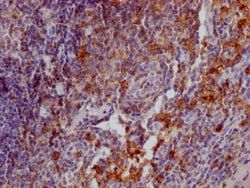
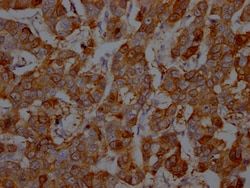
ELISA, Immunohistochemistry (Paraffin), Western Blot
Clone
10H9
Conjugate
Unconjugated
Gene
ANXA2
Gene Alias
33-kDa calcimedin; 33-kDa lymphocyte Ca<2+>- binding protein; 33kDa lymphocyte Ca<2+>- binding protein; 36-kDa calelectrin; annexin 2; annexin A2; annexin A2 isoform 2; annexin II; Annexin-2; ANX2; ANX2L4; ANXA2; AW215814; CAL1H; calpactin I heavy chain; calpactin I heavy chain (p36); calpactin I heavy polypeptide; calpactin-1 heavy chain; chromobindin 8; chromobindin-8; epididymis secretory protein Li 270; HEL-S-270; LIP2; lipocortin II; LPC2; LPC2D; p36; PAP-IV; Placental anticoagulant protein IV; protein I
Host Species
Rabbit
Purification Method
Affinity chromatography
Regulatory Status
RUO
Gene ID (Entrez)
302
Content And Storage
-20°C or -80°C if preferred
Isotype
IgG
Related Products


Description
- Description This gene encodes a member of the annexin family
- Members of this calcium-dependent phospholipid-binding protein family play a role in the regulation of cellular growth and in signal transduction pathways
- This protein functions as an autocrine factor which heightens osteoclast formation and bone resorption
- This gene has three pseudogenes located on chromosomes 4, 9 and 10, respectively
- Multiple alternatively spliced transcript variants encoding different isoforms have been found for this gene.