Claudin 5 Recombinant Rabbit Monoclonal Antibody (13G6), Invitrogen™
Manufacturer: Thermo Scientific
Select a Size
| Pack Size | SKU | Availability | Price |
|---|---|---|---|
| Each of 1 | FEMA550203-Each-of-1 | In Stock | ₹ 37,202.00 |
FEMA550203 - Each of 1
In Stock
Quantity
1
Base Price: ₹ 37,202.00
GST (18%): ₹ 6,696.36
Total Price: ₹ 43,898.36
Antigen
Claudin 5
Classification
Recombinant Monoclonal
Concentration
1.2 mg/mL
Formulation
PBS with 50% glycerol and 0.02% sodium azide, pH 7.4
Gene Accession No.
O00501
Gene Symbols
CLDN5
Immunogen
A synthesized peptide derived from Human CLDN5
Quantity
100 μL
Primary or Secondary
Primary
Target Species
Human
Form
Liquid
Applications
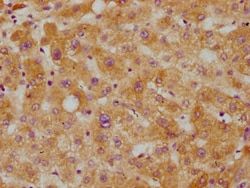
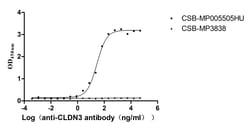
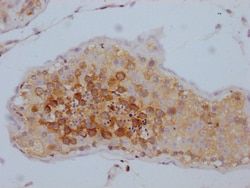
ELISA, Immunohistochemistry (Paraffin)
Clone
13G6
Conjugate
Unconjugated
Gene
CLDN5
Gene Alias
AI854493, AWAL, BEC1, Brain endothelial cell clone 1 protein, claudin 5, claudin 5 (transmembrane protein deleted in velocardiofacial syndrome), claudin-5, claudin-5 protein, Cldn5, CPETRL1, lung-specific membrane protein, MBEC1, TMDVCF, TMVCF, Transmembrane protein deleted in VCFS, transmembrane protein deleted in velocardiofacial syndrome, Unknown (protein for MGC:138054)
Host Species
Rabbit
Purification Method
Affinity chromatography
Regulatory Status
RUO
Gene ID (Entrez)
7122
Content And Storage
-20°C or -80°C if preferred
Isotype
IgG
Related Products

Description
- This gene encodes a member of the claudin family
- Claudins are integral membrane proteins and components of tight junction strands
- Tight junction strands serve as a physical barrier to prevent solutes and water from passing freely through the paracellular space between epithelial or endothelial cell sheets, and also play critical roles in maintaining cell polarity and signal transductions
- Differential expression of this gene has been observed in different types of malignancies, including breast cancer, ovarian cancer, hepatocellular carcinomas, urinary tumors, prostate cancer, lung cancer, head and neck cancers, thyroid carcinomas, etc
- Alternatively spliced transcript variants encoding different isoforms have been found.