ATR Monoclonal Antibody (3G6D2), Invitrogen™
Manufacturer: Thermo Scientific
Select a Size
| Pack Size | SKU | Availability | Price |
|---|---|---|---|
| Each of 1 | FERMA548382-Each-of-1 | In Stock | ₹ 43,565.50 |
FERMA548382 - Each of 1
In Stock
Quantity
1
Base Price: ₹ 43,565.50
GST (18%): ₹ 7,841.79
Total Price: ₹ 51,407.29
Antigen
ATR
Classification
Monoclonal
Concentration
1 mg/mL
Formulation
PBS with 0.05% sodium azide
Gene Accession No.
Q13535
Gene Symbols
ATR
Immunogen
Purified recombinant fragment of human ATR (AA: 366-550) expressed in E. Coli.
Quantity
100 μg
Primary or Secondary
Primary
Target Species
Human
Form
Liquid
Applications
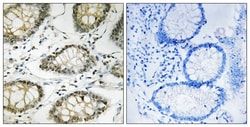
ELISA, Flow Cytometry, Immunohistochemistry, Western Blot
Clone
3G6D2
Conjugate
Unconjugated
Gene
ATR
Gene Alias
2310008J16Rik; 2810405N18Rik; ataxia telangiectasia and Rad3 related; ataxia telangiectasia and Rad3-related protein; ATR; ATR serine/threonine kinase; EC 2.7.11.1; FCTCS; FRAP-related protein 1; FRAP-related protein-1; FRP1; I79_000761; kinase ATR; MEC1; MEC1, mitosis entry checkpoint 1, homolog; protein kinase ATR; SCKL; SCKL1; Serine/threonine-protein kinase ATR; TEM8
Host Species
Mouse
Purification Method
Protein G
Regulatory Status
RUO
Gene ID (Entrez)
545
Content And Storage
Store at 4°C short term. For long term storage, store at -20°C, avoiding freeze/thaw cycles.
Isotype
IgG1
Related Products
Description
- The protein encoded by this gene is a serine/threonine kinase and DNA damage sensor, activating cell cycle checkpoint signaling upon DNA stress
- The encoded protein can phosphorylate and activate several proteins involved in the inhibition of DNA replication and mitosis, and can promote DNA repair, recombination, and apoptosis
- This protein is also important for fragile site stability and centrosome duplication
- Defects in this gene are a cause of Seckel syndrome 1.