FERMA549116
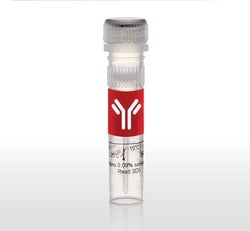
TLR9 Monoclonal Antibody (5G5), Biotin, Invitrogen™
Manufacturer: Thermo Scientific
Select a Size
| Pack Size | SKU | Availability | Price |
|---|---|---|---|
| Each of 1 | FERMA549116-Each-of-1 | In Stock | ₹ 34,443.00 |
FERMA549116 - Each of 1
In Stock
Quantity
1
Base Price: ₹ 34,443.00
GST (18%): ₹ 6,199.74
Total Price: ₹ 40,642.74
Antigen
TLR9
Classification
Monoclonal
Concentration
100 μg/mL
Formulation
PBS with 0.1% BSA and 0.02% sodium azide
Gene Accession No.
Q9EQU3, Q9NR96
Gene Symbols
Tlr9
Immunogen
Purified fusion protein of extracellular domain of human TLR9 (AA 1-815) and human IgGFc
Quantity
50 μg
Primary or Secondary
Primary
Target Species
Human, Mouse
Form
Liquid
Applications
Inhibition Assays, Western Blot
Clone
5G5
Conjugate
Biotin
Gene
Tlr9
Gene Alias
CD289; Tlr9; toll like receptor 9; toll-like receptor 9; UNQ5798/PRO19605
Host Species
Mouse
Purification Method
Protein G
Regulatory Status
RUO
Gene ID (Entrez)
54106, 81897
Content And Storage
4° C
Isotype
IgG2a
Related Products

Description
- The monoclonal antibody 5G5 reacts with RAW macrophages and TLR9 transfected HEK293 cells, and is cross reactive with canine TLR9
- The protein encoded by this gene is a member of the Toll-like receptor family which plays a fundamental role in pathogen recognition and activation of innate immunity
- TLRs are highly conserved from Drosophila to humans and share structural and functional similarities
- They recognize pathogen-associated molecular patterns that are expressed on infectious agents, and mediate the production of cytokines necessary for the development of effective immunity
- The various TLRs exhibit different patterns of expression
- This gene is preferentially expressed in immune cell rich tissues, such as spleen, lymph node, bone marrow and peripheral blood leukocytes
- Studies in mice and human indicate that this receptor mediates cellular response to unmethylated CpG dinucleotides in bacterial DNA to mount an innate immune response.