MA106200
Mitotic Cells Monoclonal Antibody (8B3G), Invitrogen™
Manufacturer: Thermo Scientific
Select a Size
| Pack Size | SKU | Availability | Price |
|---|---|---|---|
| Each of 1 | MA106200-Each-of-1 | In Stock | ₹ 47,481.50 |
MA106200 - Each of 1
In Stock
Quantity
1
Base Price: ₹ 47,481.50
GST (18%): ₹ 8,546.67
Total Price: ₹ 56,028.17
Antigen
Mitotic Cells
Classification
Monoclonal
Concentration
1 mg/mL
Formulation
PBS with 0.09% sodium azide
Immunogen
Total cell lysate of the human bladder carcinoma cell line T24.
Quantity
100 μL
Primary or Secondary
Primary
Content And Storage
Store at 4°C short term. For long term storage, store at -20°C, avoiding freeze/thaw cycles.
Form
Liquid
Applications
Flow Cytometry, Immunocytochemistry
Clone
8B3G
Conjugate
Unconjugated
Host Species
Mouse
Purification Method
purified
Regulatory Status
RUO
Target Species
Human, Zebrafish
Product Type
Antibody
Isotype
IgM
Related Products



Description
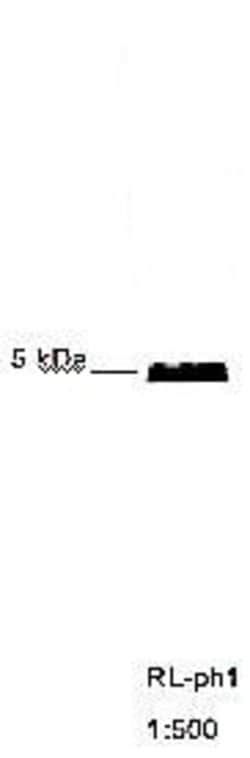
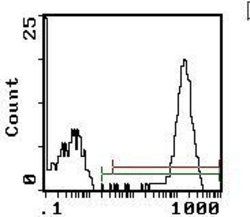
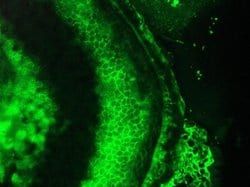
- MA1-06200 detects Mitotic cells in human samples
- MA1-06200 has sucessfully been used in immunocytochemistry and FACS procedures
- The MA1-06200 immunogen is total cell lysate of the human bladder carcinoma cell line T24
- The life cycle of a eukaryotic cell consists of various phases, two of which can morphologically and biochemically be identified
- Firstly, during mitosis (M-phase), in which the cell divides into two identical daughter cells, chromosome condensation and spindle formation are microscopically visible
- Secondly, in S-phase the DNA of a cell is replicated, a process that can be detected using biochemical techniques, such as the BrdU incorporation assay
- In between the M- and S-phase two gap phases occur: the G1-phase, the gap between mitosis and the start of DNA replication, and G2-phase, the gap between completion of DNA replication and the onset of mitosis
- From G1-phase a cell can leave the cell cycle and enter G0, a ‘quiescent’ phase
- Regulation of the cell cycle predominantly occurs at three major control points, which govern the transition from G0 to G1, from G1 to S, and from G2 to M-phase.