OMA106030
Cardiotin Monoclonal Antibody (R2G), Invitrogen™
Manufacturer: Thermo Scientific
Select a Size
| Pack Size | SKU | Availability | Price |
|---|---|---|---|
| Each of 1 | OMA106030-Each-of-1 | In Stock | ₹ 47,570.50 |
OMA106030 - Each of 1
In Stock
Quantity
1
Base Price: ₹ 47,570.50
GST (18%): ₹ 8,562.69
Total Price: ₹ 56,133.19
Antigen
Cardiotin
Classification
Monoclonal
Concentration
1 mg/mL
Formulation
PBS with 0.09% sodium azide
Immunogen
Total protein extract of chicken gizzard.
Quantity
100 μL
Primary or Secondary
Primary
Content And Storage
Store at 4°C short term. For long term storage, store at -20°C, avoiding freeze/thaw cycles.
Form
Liquid
Applications
Immunohistochemistry (Frozen), Immunohistochemistry (Paraffin), Western Blot
Clone
R2G
Conjugate
Unconjugated
Host Species
Mouse
Purification Method
Ammonium sulfate precipitation
Regulatory Status
RUO
Target Species
Canine, Chicken, Feline, Goat, Hamster, Human, Mouse, Non-human Primate, Rabbit, Rat, X. laevis, Zebrafish
Product Type
Antibody
Isotype
IgM
Related Products




Description
- OMA1-06030 detects cardiotin from mouse, rat, hamster, canine, monkey, pig, cat, rabbit, frog, goat, xenopus,feline and human cardiomyocytes
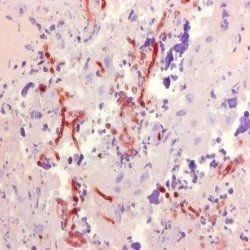
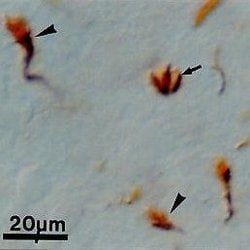
- OMA1-06030 has been successfully used in Western blot and immunohistochemistry procedures
- By Western blot, this antibody detects an ∽300 kDa protein representing the cardiotin protein complex, as well as ∽100 kDa and ∽60 kDa bands representing the cardiotin subunits from rat heart extract
- The OMA1-06030 immunogen is total protein extract from chicken gizzard
- Cardiotin is a recently discovered, high molecular weight protein complex (∽300 kDa) located in the longitudinal SR of cardiomyocytes
- The cardiotin complex exists as 60 kDa and 100 kDa subunits
- Both subunits contain the same amino-terminal 14 amino-acid sequence, and show high homology to human skeletal muscle alpha-actin
- The tetrameric configuration of the cardiotin protein complex suggests that it exists as a transmembrane complex with the N-terminus at the cytoplasmic side of the membrane, able to interact with actin
- Immunofluorescence studies colocalize cardiotin with SERCA 2a ATPase in the longitudinal sarcoplasmic reticulum (SR), although cardiotin is not expressed in junctional SR with SERCA 2.