TLR4 Monoclonal Antibody (HTA125), Invitrogen™
Manufacturer: Thermo Scientific
Select a Size
| Pack Size | SKU | Availability | Price |
|---|---|---|---|
| Each of 1 | MA180122-Each-of-1 | In Stock | ₹ 76,184.00 |
MA180122 - Each of 1
In Stock
Quantity
1
Base Price: ₹ 76,184.00
GST (18%): ₹ 13,713.12
Total Price: ₹ 89,897.12
Antigen
TLR4
Classification
Monoclonal
Concentration
1 mg/mL
Formulation
PBS with no preservative
Gene Accession No.
O00206, Q68Y56
Gene Symbols
TLR4
Immunogen
Ba/F3 cell line expressing TLR4 (CD284).
Quantity
500 μg
Primary or Secondary
Primary
Target Species
Canine, Guinea Pig, Human, Porcine, Rhesus Monkey
Product Type
Antibody
Isotype
IgG2a
Applications
Flow Cytometry, Functional Assay, Immunoprecipitation
Clone
HTA125
Conjugate
Unconjugated
Gene
TLR4
Gene Alias
ARMD10; CD284; EGK_07381; homolog of Drosophila toll; hToll; lipopolysaccharide response; Lps; Ly87; Ran/M1; Rasl2-8; Tlr4; TLR-4; TOLL; toll like receptor 4; toll/interleukin-l receptor (TIR) domain; toll4; toll-like receptor 4; toll-like receptor 4 immunity-related protein; Toll-like receptor 4-like protein; Toll-like receptor4 protein
Host Species
Mouse
Purification Method
Protein A
Regulatory Status
RUO
Gene ID (Entrez)
100724803, 399541, 403417, 574360, 7099
Content And Storage
-20° C, Avoid Freeze/Thaw Cycles
Form
Liquid
Related Products



Description
- This product is a low-endotoxin, preservative-free formulation
- Endotoxin level is <0.01 EU/ug
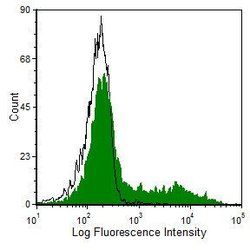
- For FACS analysis, use 10 μL of the suggested working dilution to label 1x10^6 cells in 100 μL
- Mouse anti Human CD284 antibody, clone HTA125 recognizes the human Toll like receptor 4 (TLR4) cell surface antigen
- TLR4 is member of the Toll like receptor (TLR) family which plays a fundamental role in pathogen recognition and activation of innate immunity
- TLRs are highly conserved from Drosophila to humans and share structural and functional similarities
- This receptor is most abundantly expressed in placenta, and in myelomonocytic subpopulation of the leukocytes
- Mammalian cells respond to LPS by activating TLR4
- TLR4 belongs to the multi-protein complex of lipopolysaccharide (LPS) receptor, containing CD14, LY96 and TLR4, and is involved in signal transduction events induced by lipopolysaccharide (LPS) found in most gram-negative bacteria
- TLR4 aids in the recognition of pathogen-associated molecular patterns (PAMPs) that are expressed on infectious agents, and mediate the production of cytokines necessary for the development of effective immunity
- The various TLRs exhibit different patterns of expression
- Mutations in the TLR4 gene have been associated with differences in LPS responsiveness
- Also, several transcript variants of the TLR4 gene have been found, but the protein coding potential of most of them is uncertain
- TLR4 is expressed by peripheral blood monocytes and a small population of B-cells and is also expressed in human placenta
- Studies with TLR4-deficient mice indicate that the main ligand for TLR is lipopolysaccharide
- Consequently, these mice also showed increased susceptibility to Gram-negative sepsis.