TRIP230 Monoclonal Antibody (10G5), Invitrogen™
Manufacturer: Thermo Scientific
Select a Size
| Pack Size | SKU | Availability | Price |
|---|---|---|---|
| Each of 1 | MA123294-Each-of-1 | In Stock | ₹ 47,036.50 |
MA123294 - Each of 1
In Stock
Quantity
1
Base Price: ₹ 47,036.50
GST (18%): ₹ 8,466.57
Total Price: ₹ 55,503.07
Antigen
TRIP230
Classification
Monoclonal
Concentration
1 mg/mL
Formulation
PBS with no preservative; pH 7.4
Gene Accession No.
Q15643
Gene Symbols
TRIP11
Immunogen
Amino acids 1099-1372 of Trip230 expressed in E. coli.
Quantity
100 μL
Primary or Secondary
Primary
Target Species
Human
Product Type
Antibody
Isotype
IgG1
Applications
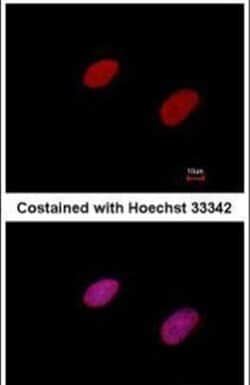
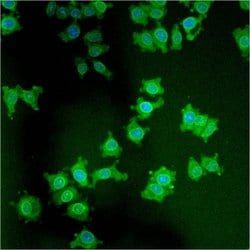
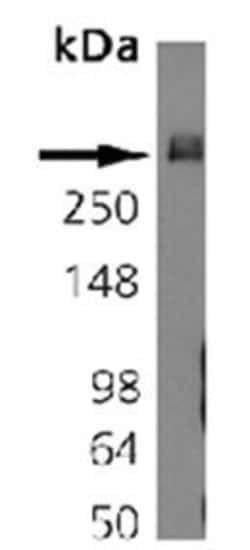
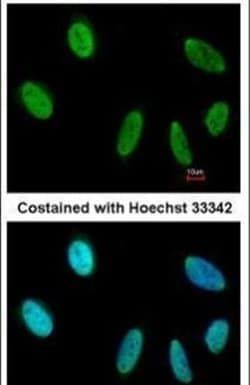
Immunocytochemistry, Immunoprecipitation, Western Blot
Clone
10G5
Conjugate
Unconjugated
Gene
TRIP11
Gene Alias
ACG1A; CEV14; clonal evolution-related gene on chromosome 14 protein; GMAP210; GMAP-210; golgi-associated microtubule-binding protein 210; Golgi-microtubule-associated protein of 210 kDa; thyroid hormone receptor interactor 11; thyroid receptor-interacting protein 11; TR-interacting protein 11; TRIP11; TRIP-11; Trip230
Host Species
Mouse
Purification Method
Protein G
Regulatory Status
RUO
Gene ID (Entrez)
9321
Content And Storage
Store at 4°C short term. For long term storage, store at -20°C, avoiding freeze/thaw cycles.
Form
Liquid
Related Products


Description
- Recommended positive controls: MCF7, HBL100, T24
- The Trip230 gene encodes a protein of 1,978 amino acids with an estimated molecular mass of 230 kDa
- The gene is located on chromosome 14q31, which is in a region associated with genetic alterations and thyroid hormone response abnormalities
- The Trip230 protein interacts with Rb and thyroid hormone receptor (TR) using two distinct domains
- Complex formation with Rb is in a hormone independent manner, but when Trip230 forms a complex with TR, it is in a thyroid hormone-dependent manner
- After T3 treatment, Trip230 is phosphorylated and transported to the nucleus, suggesting that phosphorylation may be important for its nuclear translocation.