CRALBP Monoclonal Antibody (B2), Invitrogen™
Manufacturer: Thermo Scientific
Select a Size
| Pack Size | SKU | Availability | Price |
|---|---|---|---|
| Each of 1 | MA1813-Each-of-1 | In Stock | ₹ 49,973.50 |
MA1813 - Each of 1
In Stock
Quantity
1
Base Price: ₹ 49,973.50
GST (18%): ₹ 8,995.23
Total Price: ₹ 58,968.73
Antigen
CRALBP
Classification
Monoclonal
Concentration
1 mg/mL
Formulation
PBS with 1mg/mL BSA and 0.05% sodium azide
Gene Accession No.
P10123, P12271, Q9Z275
Gene Symbols
RLBP1
Immunogen
Human recombinant CRALBP.
Quantity
100 μg
Primary or Secondary
Primary
Target Species
Bovine, Human, Mouse, Non-human Primate, Rat
Product Type
Antibody
Isotype
IgG1
Applications
Flow Cytometry, Immunohistochemistry (Frozen), Immunoprecipitation, Western Blot
Clone
B2
Conjugate
Unconjugated
Gene
RLBP1
Gene Alias
3110056M11Rik; cellular retinaldehyde-binding protein; cellular retinaldehyde-binding protein-1; CRALBP; retinaldehyde binding protein 1; retinaldehyde-binding protein 1; retinaldehyde-binding protein precursor; Rlbp1
Host Species
Mouse
Purification Method
Protein A
Regulatory Status
RUO
Gene ID (Entrez)
19771, 282038, 293049, 6017
Content And Storage
-20° C, Avoid Freeze/Thaw Cycles
Form
Liquid
Related Products



Description
- MA1-813 detects CRALBP protein in bovine, human, mouse, non-human primate and rat samples
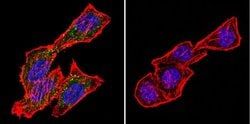
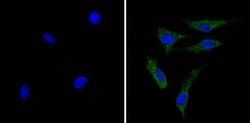
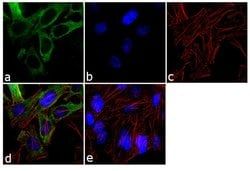
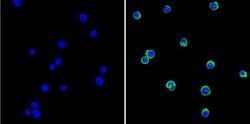
- MA1-813 has successfully been used in Western blot, immunohistochemistry, immunoprecipitation, and immunofluorescence procedures
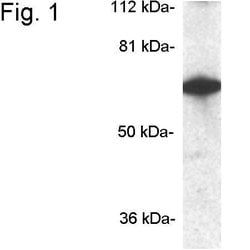
- By Western blot, this antibody detects a 37 kDa protein representing human recombinant CRALBP
- The MA1-813 immunogen is purified human recombinant CRALBP
- Cellular retinaldehyde-binding protein (CRALBP) plays an important role in the regeneration of 11-cis-retinal for use in rod visual pigments such as opsin and rhodopsin
- Once 11-cis-retinal is photoisomerized in the rod outer segment, it is converted to all-trans-retinal and further modified into all-trans-retinol
- All-trans-retinol then diffuses into the retinal pigment epithelium (RPE) to be converted back to 11-cis-retinol and further oxidized into 11-cis-retinal (both by CRALBP)
- Genetic mutations involving CRALBP's lack of function have been linked to visual disease such as bothnia dystrophy, retinitis punctata albescens, retina pigmentosa, and Newfoundland rod-cone dystrophy
- The presence of CRALBP serves as a marker for RPE and Muller glial cells of the retina.