PA14210
Bcl-G Polyclonal Antibody, Invitrogen™
Manufacturer: Thermo Scientific
Select a Size
| Pack Size | SKU | Availability | Price |
|---|---|---|---|
| Each of 1 | PA14210-Each-of-1 | In Stock | ₹ 46,502.50 |
PA14210 - Each of 1
In Stock
Quantity
1
Base Price: ₹ 46,502.50
GST (18%): ₹ 8,370.45
Total Price: ₹ 54,872.95
Antigen
Bcl-G
Classification
Polyclonal
Conjugate
Unconjugated
Gene
BCL2L14
Gene Alias
4930452K23Rik; 4933405K19Rik; 9030625M01Rik; AI429211; Apoptosis facilitator Bcl-2-like protein 14; apoptosis regulator BCL-G; BCL2 like 14; Bcl2l14; bcl2-L-14; BCL2-like 14 (apoptosis facilitator); BCLG; testicular tissue protein Li 26
Host Species
Rabbit
Purification Method
Affinity chromatography
Regulatory Status
RUO
Gene ID (Entrez)
79370
Content And Storage
-20° C, Avoid Freeze/Thaw Cycles
Form
Liquid
Applications
Western Blot
Concentration
1 mg/mL
Formulation
PBS with 0.02% sodium azide
Gene Accession No.
Q9BZR8
Gene Symbols
BCL2L14
Immunogen
Synthetic peptide corresponding to residues S(71) W P C R N S Q S S E K A(83) of the long form of human Bcl-G.
Quantity
100 μg
Primary or Secondary
Primary
Target Species
Human
Product Type
Antibody
Isotype
IgG
Related Products

Description
- PA1-4210 detects the long form of BCL-G in human samples
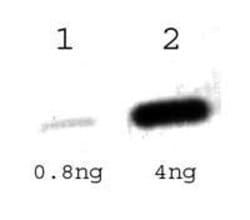
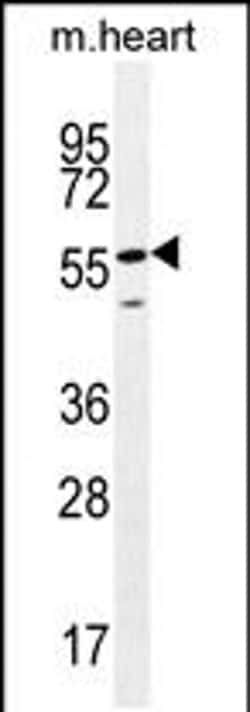
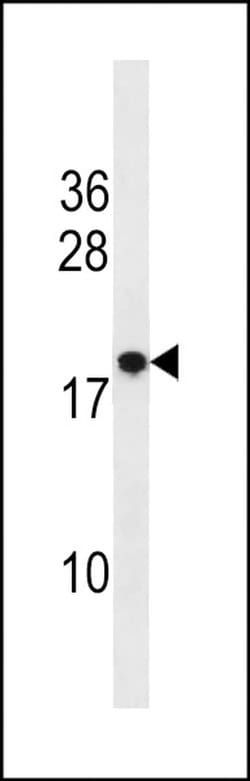
- PA1-4210 has been successfully used in Western blot procedures
- The PA1-4210 immunogen is a synthetic peptide corresponding to residues S(71) W P C R N S Q S S E K A(83) of the long form of human Bcl-G
- The protein encoded by this gene belongs to the BCL2 protein family
- BCL2 family members form hetero- or homodimers and act as anti- or pro-apoptotic regulators that are involved in a wide variety of cellular activities
- Overexpression of this gene has been shown to induce apoptosis in cells
- Three alternatively spliced transcript variants encoding two distinct isoforms have been reported for this gene.