PTPRT Polyclonal Antibody, Invitrogen™
Manufacturer: Thermo Scientific
Select a Size
| Pack Size | SKU | Availability | Price |
|---|---|---|---|
| Each of 1 | PA550568-Each-of-1 | In Stock | ₹ 46,057.50 |
PA550568 - Each of 1
In Stock
Quantity
1
Base Price: ₹ 46,057.50
GST (18%): ₹ 8,290.35
Total Price: ₹ 54,347.85
Antigen
PTPRT
Classification
Polyclonal
Conjugate
Unconjugated
Gene
PTPRT
Gene Alias
KIAA0283; mKIAA0283; mRPTPrho; protein tyrosine phosphatase, receptor type T; protein tyrosine phosphatase, receptor type, T; PTPRT; receptor protein tyrosine phosphatase; receptor protein tyrosine phosphatase-rho; receptor-type tyrosine-protein phosphatase rho; Receptor-type tyrosine-protein phosphatase T; RP5-1121H13.2; RPTPmam4; RPTP-rfo; RPTPrho; RPTP-rho; R-PTP-T
Host Species
Rabbit
Purification Method
Antigen affinity chromatography
Regulatory Status
RUO
Gene ID (Entrez)
11122, 19281
Content And Storage
-20°C
Form
Liquid
Applications
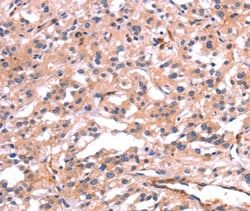
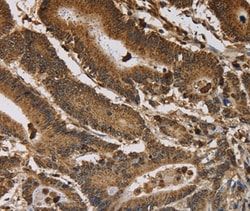
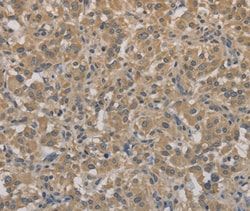
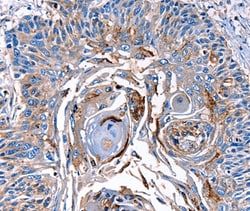
Immunohistochemistry (Paraffin)
Concentration
1.2 mg/mL
Formulation
PBS with 40% glycerol and 0.05% sodium azide; pH 7.4
Gene Accession No.
O14522, Q99M80
Gene Symbols
PTPRT
Immunogen
Synthetic peptide corresponding to a region derived from internal residues of human Protein tyrosine phosphatase, receptor type, T
Quantity
100 μL
Primary or Secondary
Primary
Target Species
Human, Mouse
Product Type
Antibody
Isotype
IgG
Related Products



Description
- The antibody detects endogenous levels of total PTPRT protein
- The protein encoded by this gene is a member of the protein tyrosine phosphatase family
- PTPs are known to be signaling molecules that regulate a variety of cellular processes including cell growth, differentiation, mitotic cycle, and oncogenic transformation
- This PTP possesses an extracellular region, a single transmembrane region, and two tandem intracellular catalytic domains, and thus represents a receptor-type PTP
- The extracellular region contains a meprin-A5 antigen-PTP domain, Ig-like and fibronectin type III-like repeats
- The protein domain structure and the expression pattern of the mouse counterpart of this PTP suggest its roles in both signal transduction and cellular adhesion in the central nervous system
- Two alternatively spliced transcript variants of this gene, which encode distinct proteins, have been reported.