LPPR5 Polyclonal Antibody, Invitrogen™
Manufacturer: Thermo Scientific
Select a Size
| Pack Size | SKU | Availability | Price |
|---|---|---|---|
| Each of 1 | PA550564-Each-of-1 | In Stock | ₹ 46,502.50 |
PA550564 - Each of 1
In Stock
Quantity
1
Base Price: ₹ 46,502.50
GST (18%): ₹ 8,370.45
Total Price: ₹ 54,872.95
Antigen
LPPR5
Classification
Polyclonal
Conjugate
Unconjugated
Gene
PLPPR5
Gene Alias
4833424O15Rik; Lipid phosphate phosphatase-related protein type 5; Lppr5; PAP2; Pap2d; phosphatidic acid phosphatase 2d; phosphatidic acid phosphatase type 2; phosphatidic acid phosphatase type 2d; phospholipid phosphatase related 5; phospholipid phosphatase-related protein type 5; Plasticity-related gene 5 protein; plasticity-related protein 5; PLPPR5; PRG5; PRG-5
Host Species
Rabbit
Purification Method
Antigen affinity chromatography
Regulatory Status
RUO
Gene ID (Entrez)
163404, 75769
Content And Storage
-20°C
Form
Liquid
Applications
Western Blot
Concentration
2.4 mg/mL
Formulation
PBS with 40% glycerol and 0.05% sodium azide; pH 7.4
Gene Accession No.
Q32ZL2, Q8BJ52
Gene Symbols
PLPPR5
Immunogen
Synthetic peptide corresponding to a region derived from internal residues of human Lipid phosphate phosphatase-related protein type 5
Quantity
100 μL
Primary or Secondary
Primary
Target Species
Human, Mouse
Product Type
Antibody
Isotype
IgG
Related Products




Description
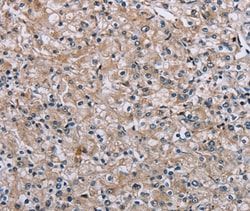
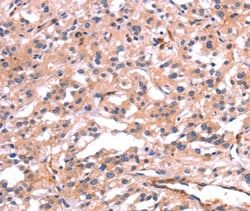
- The antibody detects endogenous levels of total PAP2D / LPPR5 protein
- The protein encoded by this gene is a type 2 member of the phosphatidic acid phosphatase (PAP) family
- All type 2 members of this protein family contain 6 transmembrane regions, and a consensus N-glycosylation site
- PAPs convert phosphatidic acid to diacylglycerol, and function in de novo synthesis of glycerolipids as well as in receptor-activated signal transduction mediated by phospholipase D
- Alternate transcriptional splice variants, encoding different isoforms, have been characterized
- [provided by RefSeq, Jul 2008] Induces filopodia formation and promotes neurite growth in a CDC42-independent manner; impedes neurite growth inhibitory-mediated axonal retraction.