DUSP11 Polyclonal Antibody, Invitrogen™
Manufacturer: Thermo Scientific
Select a Size
| Pack Size | SKU | Availability | Price |
|---|---|---|---|
| Each of 1 | PA551153-Each-of-1 | In Stock | ₹ 46,502.50 |
PA551153 - Each of 1
In Stock
Quantity
1
Base Price: ₹ 46,502.50
GST (18%): ₹ 8,370.45
Total Price: ₹ 54,872.95
Antigen
DUSP11
Classification
Polyclonal
Conjugate
Unconjugated
Gene
DUSP11
Gene Alias
2010300F21Rik; AI481497; dual specificity phosphatase 11; dual specificity phosphatase 11 (RNA/RNP complex 1-interacting); dual specificity protein phosphatase 11; DUSP11; Phosphatase that interacts with RNA/RNP complex 1; PIR1; RNA/RNP complex 1-interacting; RNA/RNP complex-1-interacting phosphatase; RNA/RNP complex-1-interacting phosphatase-like protein; RNA/RNP complex-interacting phosphatase; serine/threonine specific protein phosphatase
Host Species
Rabbit
Purification Method
Antigen affinity chromatography
Regulatory Status
RUO
Gene ID (Entrez)
8446
Content And Storage
-20°C
Form
Liquid
Applications
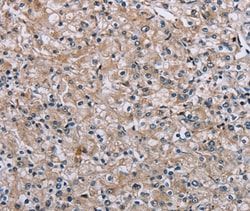
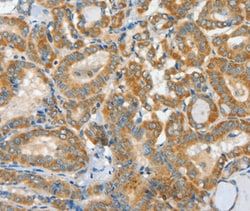
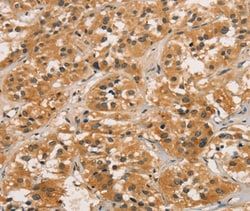
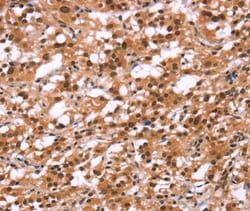
Immunohistochemistry (Paraffin)
Concentration
1.3 mg/mL
Formulation
PBS with 40% glycerol and 0.05% sodium azide; pH 7.4
Gene Accession No.
O75319
Gene Symbols
DUSP11
Immunogen
Full length fusion protein of human DUSP11
Quantity
100 μL
Primary or Secondary
Primary
Target Species
Human
Product Type
Antibody
Isotype
IgG
Related Products


Description
- The antibody detects endogenous levels of total DUSP11 protein
- DUSP11 (dual specificity phosphatase 11 (RNA/RNP complex 1-interacting)) is a member of the dual specificity protein phosphatase subfamily
- These phosphatases inactivate their target kinases by dephosphorylating both the phosphoserine/threonine and phosphotyrosine residues
- They negatively regulate members of the mitogen-activated protein (MAP) kinase superfamily (MAPK/ERK, SAPK/JNK, p38), which is associated with cellular proliferation and differentiation
- Different members of the family of dual specificity phosphatases show distinct substrate specificities for various MAP kinases, different tissue distribution and subcellular localization, and different modes of inducibility of their expression by extracellular stimuli
- This gene product is localized to the nucleus, and is novel in that it binds directly to RNA and splicing factors, and thus suggested to participate in nuclear mRNA metabolism.