PIMA1828
VRK1 Monoclonal Antibody (1F6), Invitrogen™
Manufacturer: Thermo Scientific
Select a Size
| Pack Size | SKU | Availability | Price |
|---|---|---|---|
| Each of 1 | PIMA1828-Each-of-1 | In Stock | ₹ 44,455.50 |
PIMA1828 - Each of 1
In Stock
Quantity
1
Base Price: ₹ 44,455.50
GST (18%): ₹ 8,001.99
Total Price: ₹ 52,457.49
Antigen
VRK1
Classification
Monoclonal
Concentration
1 mg/mL
Formulation
PBS with 1mg/mL BSA and 0.05% sodium azide
Gene Accession No.
Q80X41, Q99986
Gene Symbols
VRK1
Immunogen
Recombinant fusion protein GST-VRK1.
Quantity
100 μg
Primary or Secondary
Primary
Target Species
Human, Mouse
Product Type
Antibody
Isotype
IgG1
Applications
Immunocytochemistry, Immunohistochemistry, Western Blot
Clone
1F6
Conjugate
Unconjugated
Gene
VRK1
Gene Alias
51PK; MGC117401; MGC138280; PCH1; PCH1A; Serine/threonine-protein kinase 51PK; serine/threonine-protein kinase VRK1; vaccinia related kinase 1; vaccinia virus B1R-related kinase 1; vaccinia-related kinase 1; VRK1
Host Species
Mouse
Purification Method
Protein A
Regulatory Status
RUO
Gene ID (Entrez)
22367, 7443
Content And Storage
4° C
Form
Liquid
Related Products



Description
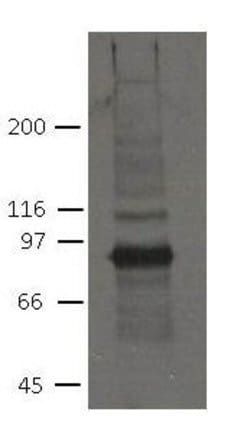
- MA1-828 detects VRK1 from human and mouse samples
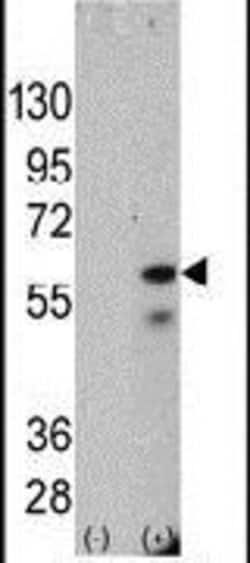
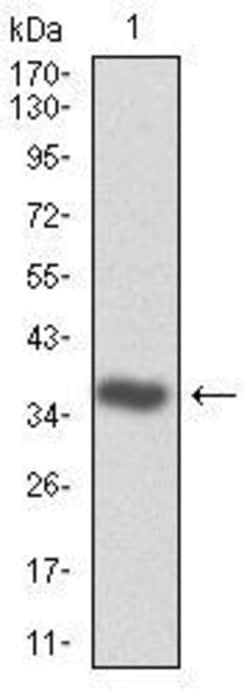
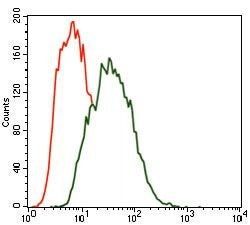
- MA1-828 has been successfully used in Western blot, immunofluorescence, and immunohistochemistry applications
- For Western blotting, it is recommended to block with 3% BSA (not milk)
- The MA1-828 immunogen is recombinant fusion protein GST-VRK1
- Human vaccinia-related kinase 1 (VRK1) is a new kinase related to a poxvirus kinase, and more distantly to the casein kinase 1 family
- VRK1 shows strong autophosphorylating activity in several Ser and Thr residues
- VRK has also been found to be an upstream regulator of p53 that belongs to a new signaling pathway.