PIMA511711
Tryptase Monoclonal Antibody (AA1), Invitrogen™
Manufacturer: Thermo Scientific
Select a Size
| Pack Size | SKU | Availability | Price |
|---|---|---|---|
| Each of 1 | PIMA511711-Each-of-1 | In Stock | ₹ 44,544.50 |
PIMA511711 - Each of 1
In Stock
Quantity
1
Base Price: ₹ 44,544.50
GST (18%): ₹ 8,018.01
Total Price: ₹ 52,562.51
Antigen
Tryptase
Classification
Monoclonal
Concentration
50 mg/mL
Formulation
PBS with 0.2% BSA and 0.09% sodium azide; pH 7.4
Gene Accession No.
Q15661
Gene Symbols
Tpsab1
Immunogen
Human mast cell tryptase purified from human lung tissues
Quantity
500 μL
Primary or Secondary
Primary
Target Species
Canine, Feline, Human, Non-human Primate
Product Type
Antibody
Isotype
IgG1
Applications
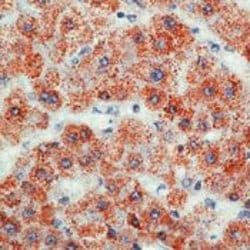
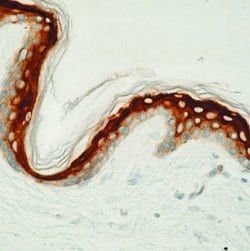
Immunohistochemistry (Paraffin), Western Blot
Clone
AA1
Conjugate
Unconjugated
Gene
Tpsab1
Gene Alias
TPSG1/TPSB2/TPSAB1/TPSD1
Host Species
Mouse
Purification Method
Protein G
Regulatory Status
RUO
Gene ID (Entrez)
7177
Content And Storage
4° C
Form
Liquid
Related Products



Description
- MA5-11711 targets Mast Cell Tryptase in IHC (P) and WB applications and shows reactivity with Canine, Feline, Human, and Non-human primate samples
- The MA5-11711 immunogen is human mast cell tryptase purified from human lung tissues
- Tryptase is a protein that belongs to the family of serine proteases and is primarily found in mast cells
- It plays a crucial role in the immune response by cleaving and activating other proteins involved in inflammation and tissue repair
- Tryptase is also involved in the regulation of blood pressure and has been implicated in various diseases, including asthma, allergies, and cardiovascular disorders
- Its structure consists of four identical subunits that form a tetramer, and it is activated by proteolytic cleavage of its proenzyme form.