PIMA512114
Mouse anti-Human Kappa Light Chain Secondary Antibody, Biotin, Invitrogen™
Manufacturer: Thermo Scientific
Select a Size
| Pack Size | SKU | Availability | Price |
|---|---|---|---|
| Each of 1 | PIMA512114-Each-of-1 | In Stock | ₹ 38,003.00 |
PIMA512114 - Each of 1
In Stock
Quantity
1
Base Price: ₹ 38,003.00
GST (18%): ₹ 6,840.54
Total Price: ₹ 44,843.54
Antigen
Human Kappa Light Chain
Classification
Monoclonal
Concentration
0.2 mg/mL
Formulation
PBS with 0.2% BSA and 0.09% sodium azide; pH 7.4
Host Species
Mouse
Purification Method
Protein G
Regulatory Status
RUO
Target Species
Human
Form
Liquid
Applications
ELISA, Flow Cytometry, Immunohistochemistry (Paraffin), Immunoprecipitation, Western Blot
Clone
L1C1
Conjugate
Biotin
Gene Alias
Immunoglobulin kappa light chain, Ig kappa light chain, Ig kappa, kappa light chain, Igk
Immunogen
B lymphoma cells
Quantity
500 μL
Primary or Secondary
Secondary
Content And Storage
4° C
Isotype
IgG1
Related Products


Description
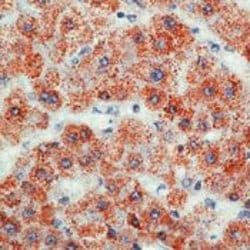
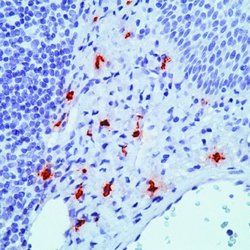
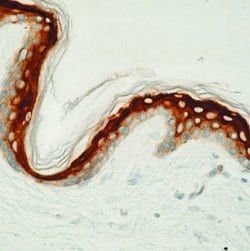
- By Western blot, MA5-12114 detects Human Ig kappa light chain chain at ∽25kD in human samples
- At high concentrations, the antibody will also detect heavy chain
- By ELISA and WB, MA5-12114 does not react with human Ig lambda light chain
- Anti-Human secondary antibodies are affinity-purified antibodies with well-characterized specificity for human immunoglobulins and are useful in the detection, sorting or purification of its specified target
- Secondary antibodies offer increased versatility enabling users to use many detection systems (e.g
- HRP, AP, fluorescence)
- They can also provide greater sensitivity through signal amplification as multiple secondary antibodies can bind to a single primary antibody
- Most commonly, secondary antibodies are generated by immunizing the host animal with a pooled population of immunoglobulins from the target species and can be further purified and modified (i.e
- immunoaffinity chromatography, antibody fragmentation, label conjugation, etc.) to generate highly specific reagents.