PIMA515532
GATA4 Monoclonal Antibody (6H10), Invitrogen™
Manufacturer: Thermo Scientific
Select a Size
| Pack Size | SKU | Availability | Price |
|---|---|---|---|
| Each of 1 | PIMA515532-Each-of-1 | In Stock | ₹ 52,554.50 |
PIMA515532 - Each of 1
In Stock
Quantity
1
Base Price: ₹ 52,554.50
GST (18%): ₹ 9,459.81
Total Price: ₹ 62,014.31
Antigen
GATA4
Classification
Monoclonal
Concentration
Conc. Not Determined
Formulation
ascites with 0.03% sodium azide
Gene Accession No.
P43694, P46152, Q08369
Gene Symbols
GATA4
Immunogen
Purified recombinant fragment of human GATA4 expressed in E. Coli.
Regulatory Status
RUO
Gene ID (Entrez)
14463, 2626, 54254
Content And Storage
Store at 4°C short term. For long term storage, store at -20°C, avoiding freeze/thaw cycles.
Form
Liquid
Applications
ChIP Assay, ELISA, Western Blot
Clone
6H10
Conjugate
Unconjugated
Gene
GATA4
Gene Alias
ASD2; DNA-binding protein GATA-GT2; GAT4; GATA binding protein 4; GATA4; Gata-4; GATA-binding factor 4; GATA-binding protein 4; MGC126629; TACHD; TOF; Transcription factor GATA-4; VSD1
Host Species
Mouse
Quantity
100 μL
Primary or Secondary
Primary
Target Species
Human, Mouse, Rat
Product Type
Antibody
Isotype
IgG2b
Related Products
Description
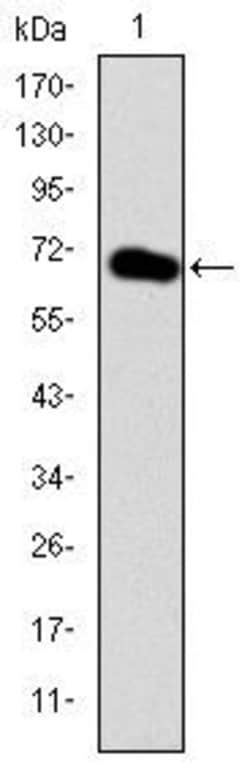
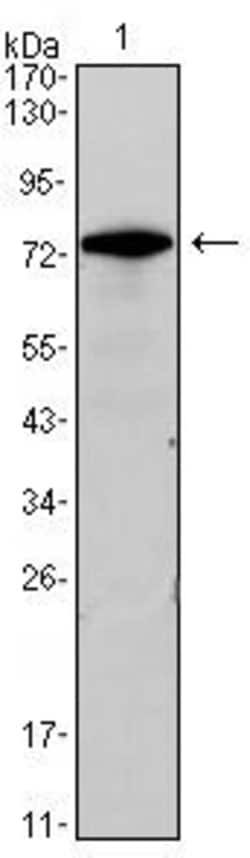
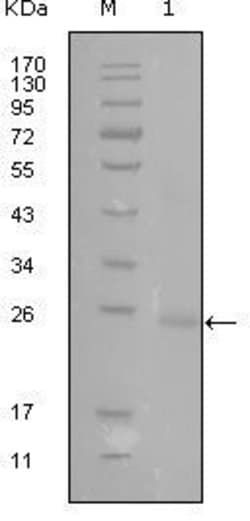
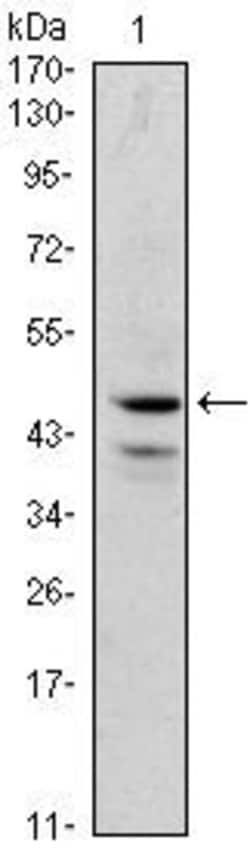
- MA5-15532 targets GATA4 in indirect ELISA, WB and ChIP applications and shows reactivity with Human and mouse samples
- The MA5-15532 immunogen is purified recombinant fragment of human GATA4 expressed in E
- Coli
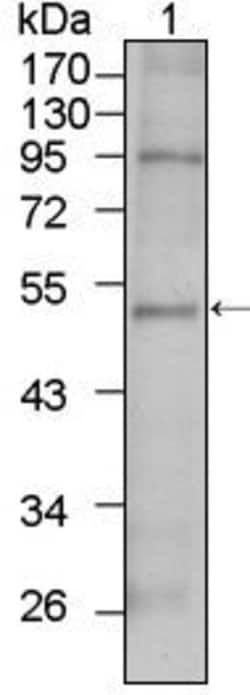
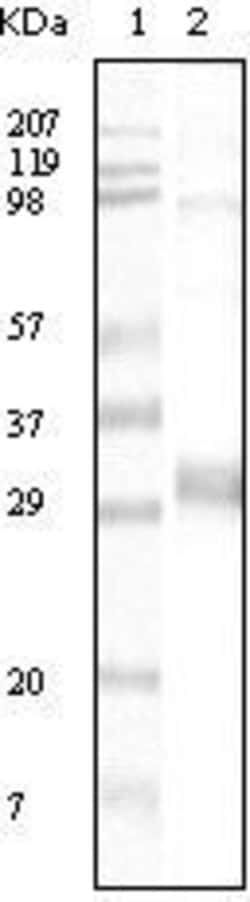
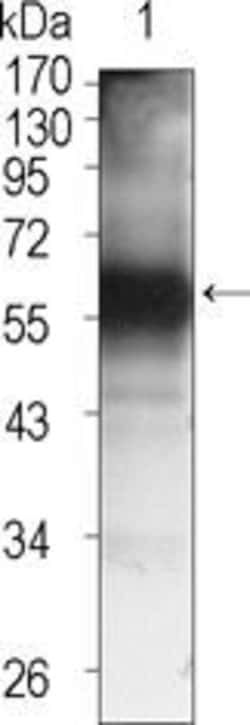
- MA5-15532 detects GATA4 which has a predicted molecular weight of approximately 46kDa
- GATA4 is a member of the GATA family of zinc-finger transcription factors
- Members of this family recognize the GATA motif which is present in the promoters of many genes
- This protein is thought to regulate genes involved in embryogenesis and in myocardial differentiation and function
- Mutations in the gene encoding GATA4 have been associated with cardiac septal defects.