PIMA515674
THAP11 Monoclonal Antibody (3F3), Invitrogen™
Manufacturer: Thermo Scientific
Select a Size
| Pack Size | SKU | Availability | Price |
|---|---|---|---|
| Each of 1 | PIMA515674-Each-of-1 | In Stock | ₹ 50,062.50 |
PIMA515674 - Each of 1
In Stock
Quantity
1
Base Price: ₹ 50,062.50
GST (18%): ₹ 9,011.25
Total Price: ₹ 59,073.75
Antigen
THAP11
Classification
Monoclonal
Concentration
Conc. Not Determined
Formulation
ascites with 0.03% sodium azide
Gene Accession No.
Q96EK4
Gene Symbols
THAP11
Immunogen
Purified recombinant fragment of human THAP11 expressed in E. Coli.
Regulatory Status
RUO
Gene ID (Entrez)
57215
Content And Storage
Store at 4°C short term. For long term storage, store at -20°C, avoiding freeze/thaw cycles.
Form
Liquid
Applications
ELISA, Flow Cytometry, Immunocytochemistry, Immunohistochemistry, Western Blot
Clone
3F3
Conjugate
Unconjugated
Gene
THAP11
Gene Alias
2810036E22Rik; AB041579; CTG-B43a; CTG-B45d; HRIHFB2206; MNCb-2032; Ronin; THAP domain containing 11; THAP domain-containing protein 11; Thap11
Host Species
Mouse
Quantity
100 μL
Primary or Secondary
Primary
Target Species
Human
Product Type
Antibody
Isotype
IgG1
Related Products
Description
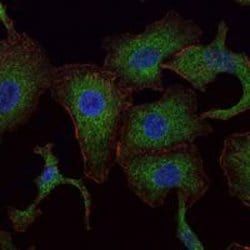
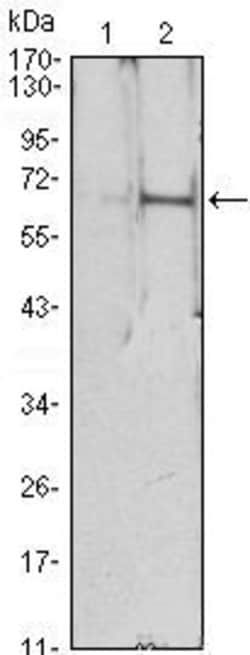
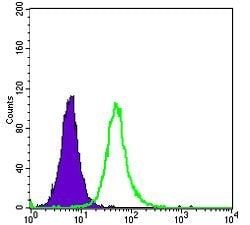
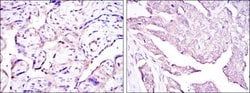
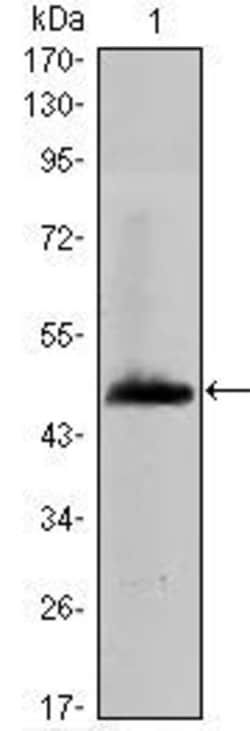
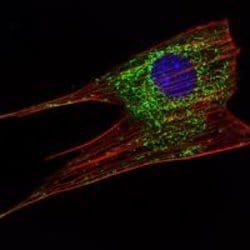
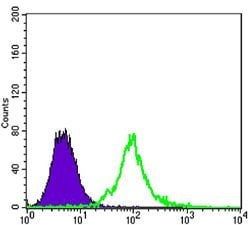
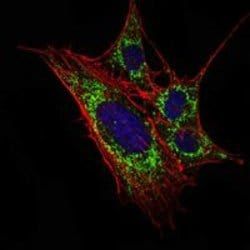
- MA5-15674 targets THAP11 in indirect ELISA, FACS, IF, IHC, and WB applications and shows reactivity with Human samples
- The MA5-15674 immunogen is purified recombinant fragment of human THAP11 expressed in E
- Coli
- MA5-15674 detects THAP11 which has a predicted molecular weight of approximately 44kDa
- This gene encodes two proteins, the SART1protein expressed in the nucleus of the majority of proliferating cells, and the SART1protein expressed in the cytosol of epithelial cancers
- The SART1protein is translated by the mechanism of -1 frameshifting during posttranscriptional regulation; its full-length sequence is not published yet
- The two encoded proteins are thought to be involved in the regulation of proliferation
- Both proteins have tumor-rejection antigens
- The SART1protein possesses tumor epitopes capable of inducing HLA-A2402-restricted cytotoxic T lymphocytes in cancer patients
- This SART1antigen may be useful in specific immunotherapy for cancer patients and may serve as a paradigmatic tool for the diagnosis and treatment of patients with atopy
- The SART1protein is found to be essential for the recruitment of the tri-snRNP to the pre-spliceosome in the spliceosome assembly pathway.