PD-1 Monoclonal Antibody (7A11B1), Invitrogen™
Manufacturer: Thermo Scientific
Select a Size
| Pack Size | SKU | Availability | Price |
|---|---|---|---|
| Each of 1 | PIMA515780-Each-of-1 | In Stock | ₹ 50,240.50 |
PIMA515780 - Each of 1
In Stock
Quantity
1
Base Price: ₹ 50,240.50
GST (18%): ₹ 9,043.29
Total Price: ₹ 59,283.79
Antigen
PD-1
Classification
Monoclonal
Concentration
1 mg/mL
Formulation
PBS with 0.02% sodium azide
Gene Accession No.
Q02242, Q15116
Gene Symbols
Pdcd1
Immunogen
A ∽150 amino acid recombinant protein from near the amino terminus of mouse PD-1
Quantity
100 μg
Primary or Secondary
Primary
Target Species
Human, Mouse, Rat
Product Type
Antibody
Isotype
IgG1
Applications
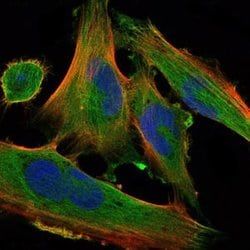
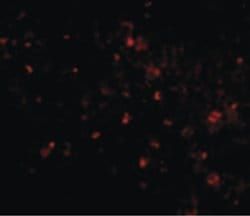
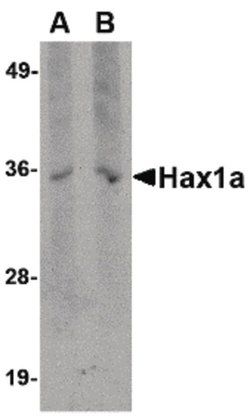
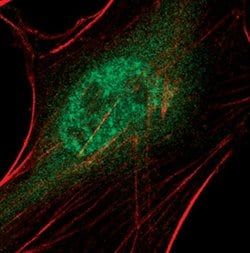
Immunohistochemistry, Western Blot
Clone
7A11B1
Conjugate
Unconjugated
Gene
Pdcd1
Gene Alias
CD279; EGK_05005; hPD1; hPD-1; hPD-l; hSLE1; Ly101; mPD-1; PD1; PD-1; Pdc1; Pdcd1; programmed cell death 1; programmed cell death 1 protein; programmed cell death protein 1; programmed cell death protein 1-like; programmed death 1; Protein PD1; protein PD-1; sCD279; SLEB2; soluble CD279; systemic lupus erythematosus susceptibility 2
Host Species
Mouse
Purification Method
Protein A
Regulatory Status
RUO
Gene ID (Entrez)
18566, 301626, 5133
Content And Storage
-20°C
Form
Liquid
Related Products
Description
- A suggested positive control is PD-1 recombinant protein
- Cell-mediated immune responses are initiated by T lymphocytes that are themselves stimulated by cognate peptides bound to MHC molecules on antig en-presenting cells (APC)
- T-cell activation is generally self-limited as activated T cells express receptors such as PD-1 (also known as PDCD-1) that mediate inhibitory signals from the APC
- PD-1 can bind two different but related ligands, PDL-1 and PDL-2
- Upon binding to either of these ligands, signals generated by PD-1 inhibit the activation of the immune response in the absence of "edanger signals"e such as LPS or other molecules associated with bacteria or other pathogens
- Evidence for this is seen in PD1-null mice who exhibit hyperactivated immune systems and autoimmune diseases
- Despite its predicted molecular weight, PD-1 often migrates at higher molecular weight in SDS-PAGE.