PIMA515798
PAX4 Monoclonal Antibody (3C12), Invitrogen™
Manufacturer: Thermo Scientific
Select a Size
| Pack Size | SKU | Availability | Price |
|---|---|---|---|
| Each of 1 | PIMA515798-Each-of-1 | In Stock | ₹ 52,198.50 |
PIMA515798 - Each of 1
In Stock
Quantity
1
Base Price: ₹ 52,198.50
GST (18%): ₹ 9,395.73
Total Price: ₹ 61,594.23
Antigen
PAX4
Classification
Monoclonal
Concentration
Conc. Not Determined
Formulation
ascites with 0.03% sodium azide
Gene Accession No.
O43316
Gene Symbols
PAX4
Immunogen
Purified recombinant fragment of human PAX4 expressed in E. Coli.
Regulatory Status
RUO
Gene ID (Entrez)
5078
Content And Storage
Store at 4°C short term. For long term storage, store at -20°C, avoiding freeze/thaw cycles.
Form
Liquid
Applications
ELISA, Western Blot
Clone
3C12
Conjugate
Unconjugated
Gene
PAX4
Gene Alias
KPD; MGC129960; MODY9; paired box 4; paired box gene 4; paired box protein Pax-4; paired domain gene 4; Pax4; Pax-4
Host Species
Mouse
Quantity
100 μL
Primary or Secondary
Primary
Target Species
Human
Product Type
Antibody
Isotype
IgG1
Related Products
Description
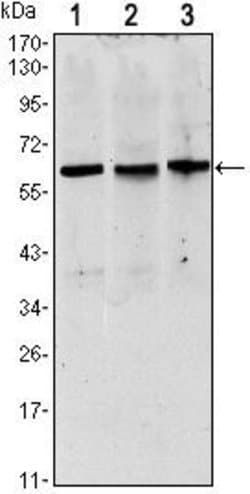
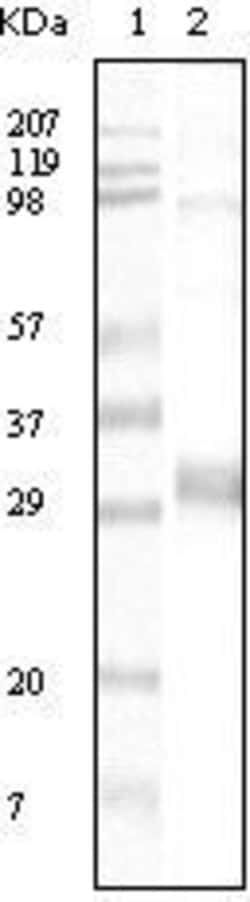
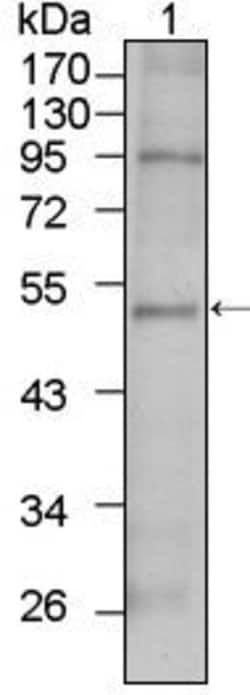
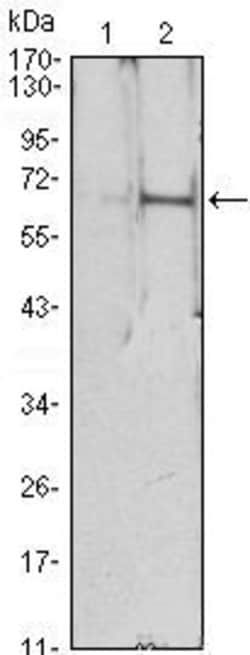
- MA5-15798 targets PAX4 in indirect ELISA, WB applications and shows reactivity with Human samples
- The MA5-15798 immunogen is purified recombinant fragment of human PAX4 expressed in E
- Coli
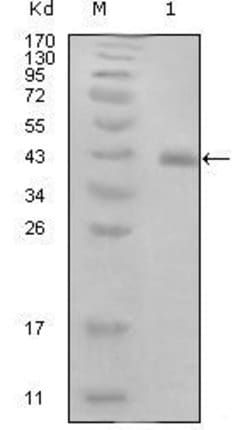
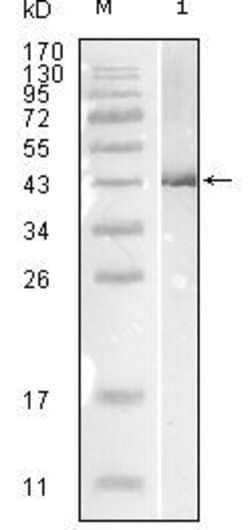
- MA5-15798 detects PAX4 which has a predicted molecular weight of approximately 38kDa
- This gene is a member of the paired box (PAX) family of transcription factors
- Members of this gene family typically contain a paired box domain, an octapeptide, and a paired-type homeodomain
- These genes play critical roles during fetal development and cancer growth
- The paired box 4 gene is involved in pancreatic islet development and mouse studies have demonstrated a role for this gene in differentiation of insulin-producing beta cells.