TLR2 Monoclonal Antibody (11G7), Invitrogen™
Manufacturer: Thermo Scientific
Select a Size
| Pack Size | SKU | Availability | Price |
|---|---|---|---|
| Each of 1 | PIMA517721-Each-of-1 | In Stock | ₹ 37,380.00 |
PIMA517721 - Each of 1
In Stock
Quantity
1
Base Price: ₹ 37,380.00
GST (18%): ₹ 6,728.40
Total Price: ₹ 44,108.40
Antigen
TLR2
Classification
Monoclonal
Concentration
1 mg/mL
Formulation
PBS with 0.02% sodium azide
Gene Accession No.
O60603
Gene Symbols
Tlr2
Immunogen
Human TLR2
Quantity
200 μg
Primary or Secondary
Primary
Target Species
Human
Product Type
Antibody
Isotype
IgG1
Applications
ELISA, Flow Cytometry, Immunoprecipitation
Clone
11G7
Conjugate
Unconjugated
Gene
Tlr2
Gene Alias
CD282; Ly105; TIL4; Tlr2; TLR-2; toll like receptor 2; toll/interleukin-1 receptor-like protein 4; Toll-like receptor; toll-like receptor 2; toll-like receptor 2 variant 1; toll-like receptor 2 variant 2; toll-like-receptor 2, exon 1a_; Toll-like-receptor, exon 1b; Toll-like-receptor, exon 1b_; Toll-like-receptor2, exon 1a
Host Species
Mouse
Purification Method
Protein G
Regulatory Status
RUO
Gene ID (Entrez)
7097
Content And Storage
Store at 4°C short term. For long term storage, store at -20°C, avoiding freeze/thaw cycles.
Form
Liquid
Related Products



Description
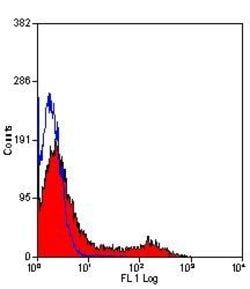
- MA5-17721 targets CD282/TLR2/Toll-like Receptor 2 in ELISA, FACS, and IP applications and shows reactivity with Human samples
- The MA5-17721 immunogen is human TLR2
- TLR2 is a member of the Toll-like receptor (TLR) family which play a fundamental role in pathogen recognition and activation of innate immunity
- TLR proteins act through adaptor molecules such as MyD88 and TIRAP to activate various kinases and transcription factors such as Protein Kinase C (PKC) alpha/beta and NF-kappa-B
- TLR2 can form heterodimers with either TLR1 or TLR6, and as a heterodimer, can recognize a variety of bacterial and mycoplasma lipoproteins respectively
- TLRs are highly conserved from Drosophila to humans and share structural and functional similarities
- The various TLRs exhibit different patterns of expression
- TLR2 is expressed most abundantly in peripheral blood leukocytes, and mediates host response to Gram-positive bacteria and yeast via stimulation of NF-kappaB
- TLR2 aids in the recognition of pathogen-associated molecular patterns (PAMPs) that are expressed on infectious agents, and mediate the production of cytokines necessary for the development of effective immunity
- Ten human homologs of TLRs (TLR1-10) have been described
- TLR2 is expressed in human cells such as tonsils, microglia, lymph nodes, and appendices, activated B-cells in germinal centers
- CD14+ monocytes express the highest level of TLR2 followed by CD15+ granulocytes, CD19+ B-cells, and CD3+ T-cells
- The expression of TLR2 on different cell types are regulated by different immune response modifiers
- For example, LPS, GM-CSF, IL-1, and IL-10 up regulates TLR2 whereas IL-4, IFN-gamma, and TNF down regulate TLR2 expression in monocytes.