PIMA528960
acnB Monoclonal Antibody (02), Invitrogen™
Manufacturer: Thermo Scientific
Select a Size
| Pack Size | SKU | Availability | Price |
|---|---|---|---|
| Each of 1 | PIMA528960-Each-of-1 | In Stock | ₹ 32,485.00 |
PIMA528960 - Each of 1
In Stock
Quantity
1
Base Price: ₹ 32,485.00
GST (18%): ₹ 5,847.30
Total Price: ₹ 38,332.30
Antigen
acnB
Classification
Monoclonal
Concentration
1 mg/mL
Formulation
PBS with no preservative
Host Species
Mouse
Purification Method
Protein A
Regulatory Status
RUO
Target Species
Bacteria
Product Type
Antibody
Applications
ELISA
Clone
02
Conjugate
Unconjugated
Gene Alias
ACN; Aconitase
Immunogen
Recombinant Escherichia coli acnB
Quantity
100μL
Primary or Secondary
Primary
Content And Storage
Store at 4°C short term. For long term storage, store at -20°C, avoiding freeze/thaw cycles.
Form
Liquid
Related Products


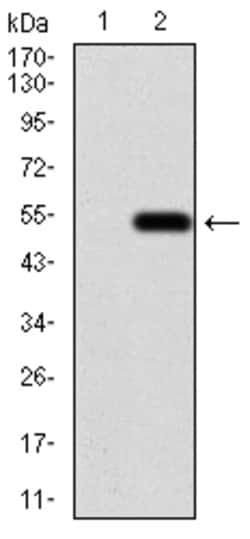
Description
- This product is preservative free
- It is recommended to add sodium azide to avoid contamination (final concentration 0.05%-0.1%)
- This antibody has specificity for Escherichia coli acnB
- acnB is involved in the catabolism of short chain fatty acids (SCFA) via the tricarboxylic acid (TCA)(acetyl degradation route) and the 2-methylcitrate cycle I (propionate degradation route)
- It catalyzes the reversible isomerization of citrate to isocitrate via cis-aconitate
- Also catalyzes the hydration of 2-methyl-cis-aconitate to yield (2R,3S)-2-methylisocitrate
- The apo form of AcnB functions as a RNA-binding regulatory protein
- During oxidative stress inactive AcnB apo-enzyme without iron sulfur clusters binds the acnB mRNA 3' UTRs (untranslated regions), stabilizes acnB mRNA and increases AcnB synthesis, thus mediating a post-transcriptional positive autoregulatory switch
- AcnB also decreases the stability of the sodA transcript.