CD81 Recombinant Rabbit Monoclonal Antibody (SN206-01), Invitrogen™
Manufacturer: Thermo Scientific
Select a Size
| Pack Size | SKU | Availability | Price |
|---|---|---|---|
| Each of 1 | PIMA532333-Each-of-1 | In Stock | ₹ 48,816.50 |
PIMA532333 - Each of 1
In Stock
Quantity
1
Base Price: ₹ 48,816.50
GST (18%): ₹ 8,786.97
Total Price: ₹ 57,603.47
Antigen
CD81
Classification
Monoclonal
Concentration
1 mg/mL
Formulation
TBS with 0.05% BSA, 40% Glycerol and 0.05% sodium azide, pH 7.4
Gene Accession No.
P35762, P60033, Q62745
Gene Symbols
CD81
Immunogen
Synthetic peptide within Human TAPA1/CD81 aa 161-210
Quantity
100 μL
Primary or Secondary
Primary
Target Species
Human, Mouse, Rat
Product Type
Antibody
Isotype
IgG
Applications
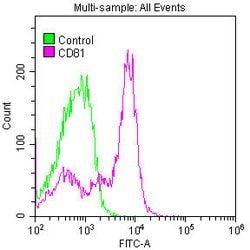
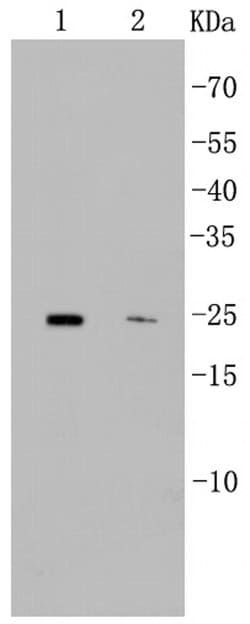
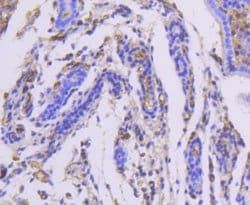
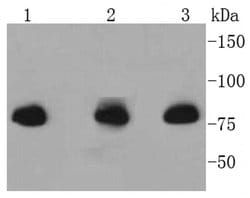
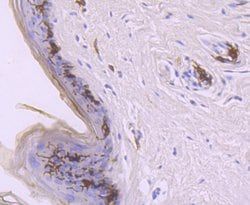
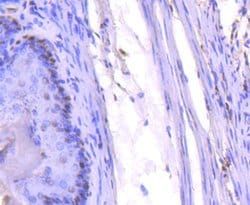
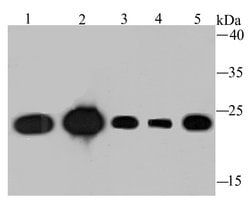
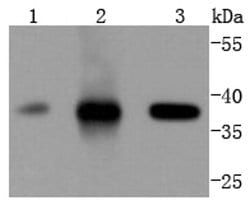
Flow Cytometry, Immunocytochemistry, Immunohistochemistry, Western Blot, Western Blot
Clone
SN206-01
Conjugate
Unconjugated
Gene
CD81
Gene Alias
26 kDa cell surface protein TAPA-1, CD 81 antigen, Cd81, CD81 antigen, CD81 antigen (target of antiproliferative antibody 1), CD81 molecule, CVID6, S5.7, Tapa1, Tapa-1, Target of the antiproliferative antibody 1, Tetraspanin28, tetraspanin-28, Tspan28, Tspan-28
Host Species
Rabbit
Purification Method
Protein A
Regulatory Status
RUO
Gene ID (Entrez)
12520, 25621, 975
Content And Storage
Store at 4°C short term. For long term storage, store at -20°C, avoiding freeze/thaw cycles.
Form
Liquid
Related Products
Description
- Recombinant rabbit monoclonal antibodies are produced using in vitro expression systems
- The expression systems are developed by cloning in the specific antibody DNA sequences from immunoreactive rabbits
- Then, individual clones are screened to select the best candidates for production
- The advantages of using recombinant rabbit monoclonal antibodies include: better specificity and sensitivity, lot-to-lot consistency, animal origin-free formulations, and broader immunoreactivity to diverse targets due to larger rabbit immune repertoire
- CD81 (TAPA-1, target of anti-proliferative antibody-1) is a member of the tetraspanin family, is expressed on virtually all nucleated cells, but above all on germinal center B cells
- CD81 forms complexes with other tetraspanin proteins, integrins, coreceptors, MHC class I and II molecules, and influences adhesion, morphology, activation, proliferation and differentiation of B, T cells
- In muscles, CD81 promotes cell fusion and myotube maintenance
- CD81 has been also identified as a receptor for the hepatitis C virus
- Like members of the tetraspanin family that include CD9, CD37, CD53, CD63, and CD82, CD81 is a cell-surface proteins that are characterized by the presence of four hydrophobic domains
- The proteins mediate signal transduction events that play a role in the regulation of cell development, activation, growth and motility
- CD81 is a cell surface glycoprotein that is known to complex with integrins
- CD81 appears to promote muscle cell fusion and support myotube maintenance
- CD81 associates with CD19, CD21, Leu 13, and integrins on cell membrane and acts as a receptor for the envelope protein E2 of chronic hepatitis C virus
- Antibodies to CD81 have anti-proliferative effects on different lymphoid cell lines, particularly those derived from large cell lymphomas
- CD81 is also localized in the tumor-suppressor gene region and is a candidate gene for malignancies.