Cyclin D3 Recombinant Rabbit Monoclonal Antibody (SD20-43), Invitrogen™
Manufacturer: Thermo Scientific
Select a Size
| Pack Size | SKU | Availability | Price |
|---|---|---|---|
| Each of 1 | PIMA532366-Each-of-1 | In Stock | ₹ 49,439.50 |
PIMA532366 - Each of 1
In Stock
Quantity
1
Base Price: ₹ 49,439.50
GST (18%): ₹ 8,899.11
Total Price: ₹ 58,338.61
Antigen
Cyclin D3
Classification
Monoclonal
Concentration
1 mg/mL
Formulation
TBS with 0.05% BSA, 40% Glycerol and 0.05% sodium azide, pH 7.4
Gene Accession No.
P30281, P30282
Gene Symbols
CCND3
Immunogen
Recombinant protein within Human Cyclin D3 aa 162-292
Quantity
100 μL
Primary or Secondary
Primary
Target Species
Human, Mouse
Product Type
Antibody
Isotype
IgG
Applications
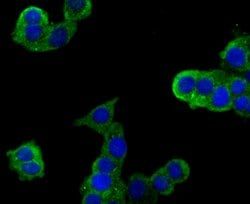
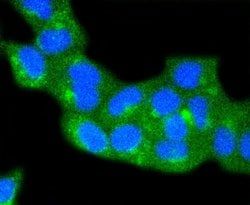
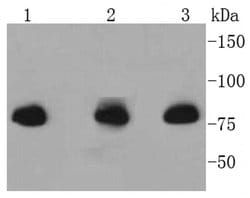
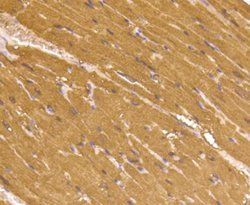
Flow Cytometry, Immunocytochemistry, Western Blot, Western Blot
Clone
SD20-43
Conjugate
Unconjugated
Gene
CCND3
Gene Alias
9230106B05Rik, AA682053, AL024085, AW146355, C78795, CCND 3, Ccnd3, CGD3, cyclin D3, CyclinD3, Cyl-3, D3 type cyclin, D3-type cyclin, G1/S-specific cyclin-D3, OTTHUMP00000223415, RP5-973N23.3
Host Species
Rabbit
Purification Method
Protein A
Regulatory Status
RUO
Gene ID (Entrez)
12445, 896
Content And Storage
Store at 4°C short term. For long term storage, store at -20°C, avoiding freeze/thaw cycles.
Form
Liquid
Related Products
Description
- Recombinant rabbit monoclonal antibodies are produced using in vitro expression systems
- The expression systems are developed by cloning in the specific antibody DNA sequences from immunoreactive rabbits
- Then, individual clones are screened to select the best candidates for production
- The advantages of using recombinant rabbit monoclonal antibodies include: better specificity and sensitivity, lot-to-lot consistency, animal origin-free formulations, and broader immunoreactivity to diverse targets due to larger rabbit immune repertoire
- The protein encoded by this gene belongs to the highly conserved cyclin family, whose members are characterized by a dramatic periodicity in protein abundance through the cell cycle
- Cyclins function as regulators of CDK kinases
- Different cyclins exhibit distinct expression and degradation patterns which contribute to the temporal coordination of each mitotic event
- This cyclin forms a complex with and functions as a regulatory subunit of CDK4 or CDK6, whose activity is required for cell cycle G1/S transition
- This protein has been shown to interact with and be involved in the phosphorylation of tumor suppressor protein Rb
- The CDK4 activity associated with this cyclin was reported to be necessary for cell cycle progression through G2 phase into mitosis after UV radiation
- Several transcript variants encoding different isoforms have been found for this gene
- Diseases associated with CCND3 include Retinoblastoma and Plasma Cell Leukemia.