FGFR2 Monoclonal Antibody (A5-E10-G7), Invitrogen™
Manufacturer: Thermo Scientific
Select a Size
| Pack Size | SKU | Availability | Price |
|---|---|---|---|
| Each of 1 | PIMA532849-Each-of-1 | In Stock | ₹ 47,481.50 |
PIMA532849 - Each of 1
In Stock
Quantity
1
Base Price: ₹ 47,481.50
GST (18%): ₹ 8,546.67
Total Price: ₹ 56,028.17
Antigen
FGFR2
Classification
Monoclonal
Concentration
1 mg/mL
Formulation
PBS with 0.1% BSA, 40% Glycerol and 0.05% sodium azide, pH 7.4
Gene Accession No.
P21802, P21803
Gene Symbols
FGFR2
Immunogen
Recombinant protein within Human FGFR2/CD332 aa 601-723
Quantity
100 μL
Primary or Secondary
Primary
Target Species
Human, Mouse
Product Type
Antibody
Isotype
IgG1
Applications
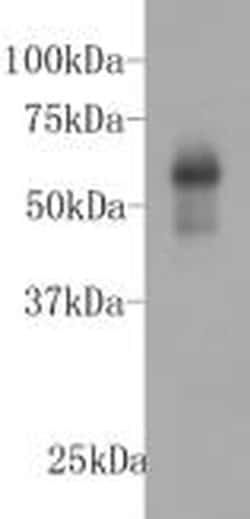
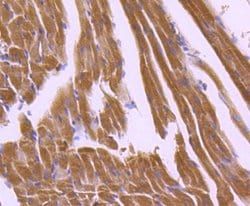
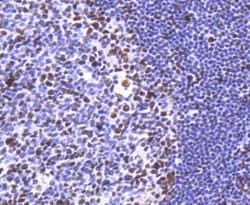
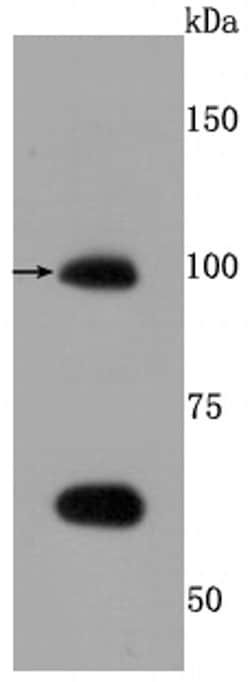
Immunocytochemistry, Western Blot, Immunohistochemistry, Western Blot
Clone
A5-E10-G7
Conjugate
Unconjugated
Gene
FGFR2
Gene Alias
AU043015, AW556123, bacteria-expressed kinase, BBDS, BEK, BEK fibroblast growth factor receptor, BFR-1, CD332, CEK3, CFD1, ECT1, FGF Receptor 2, FGF-10, FGFR2, FGFR-2, Fgfr7, Fgfr-7, fibroblast growth factor receptor 2, JWS, Keratinocyte growth factor receptor, KGFR, KGFRTr, KSAM, K-SAM, protein tyrosine kinase, receptor like 14, Soluble KGFR, svs, TK14, TK25
Host Species
Mouse
Purification Method
Protein A
Regulatory Status
RUO
Gene ID (Entrez)
14183, 2263
Content And Storage
Store at 4°C short term. For long term storage, store at -20°C, avoiding freeze/thaw cycles.
Form
Liquid
Related Products
Description
- Mouse Monoclonal Antibody FGFR2 is a member of the FGFR family of receptor tyrosine kinases
- This family is known to regulate a host of cellular functions including angiogenesis, mitogenesis, osteogenesis, myogenesis, carcinogenesis, cellular differentiation, and tissue repair after injury
- The FGFR family has also been implicated in a number of diseases including cancer, rheumatoid arthritis, and diabetic retinopathy
- FGFR family members differ from one another in their ligand affinities and tissue distribution
- Mutations in this gene are associated with Crouzon syndrome, Pfeiffer syndrome, Craniosynostosis, Apert syndrome, Jackson-Weiss syndrome, Beare-Stevenson cutis gyrata syndrome, Saethre-Chotzen syndrome, and syndromic craniosynostosis
- Multiple alternatively spliced transcript variants encoding different isoforms have been noted for this gene.