CD20 Recombinant Rabbit Monoclonal Antibody (RM272), Invitrogen™
Manufacturer: Thermo Scientific
Select a Size
| Pack Size | SKU | Availability | Price |
|---|---|---|---|
| Each of 1 | PIMA533053-Each-of-1 | In Stock | ₹ 50,507.50 |
PIMA533053 - Each of 1
In Stock
Quantity
1
Base Price: ₹ 50,507.50
GST (18%): ₹ 9,091.35
Total Price: ₹ 59,598.85
Antigen
CD20
Classification
Recombinant Monoclonal
Concentration
0.1 mg/mL
Formulation
PBS with 1% BSA, 50% glycerol and 0.09% sodium azide
Gene Accession No.
P11836
Gene Symbols
Ms4a1
Immunogen
A peptide corresponding to the C-terminus of human CD20.
Quantity
100 μL
Primary or Secondary
Primary
Target Species
Human
Product Type
Antibody
Isotype
IgG
Applications
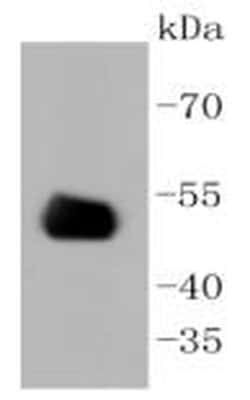
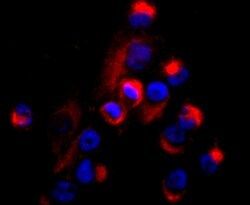
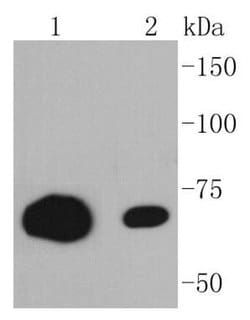
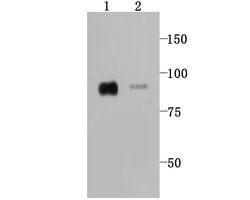
Immunocytochemistry, Immunohistochemistry (Paraffin), Western Blot
Clone
RM272
Conjugate
Unconjugated
Gene
Ms4a1
Gene Alias
AA960661, APY, ATOPY, B1, B-cell differentiation antigen Ly-44, B-lymphocyte antigen CD20, B-lymphocyte cell-surface antigen B1, B-lymphocyte surface antigen B1, Bp35, Cd20, CD20 antigen, CD20 cell surface protein, CD20 receptor, CVID5, EGK_06167, Fc epsilon receptor I beta chain, Fc Fragment of IgE high affinity I receptor for beta polypeptide, FCER1B, High affinity immunoglobulin epsilon receptor subunit beta, IgE Fc receptor subunit beta, IGEL, IGER, IGHER, LEU16, LEU-16, Leukocyte surface antigen Leu-16, Ly44, Ly-44, Lymphocyte antigen 44, membrane spanning 4-domains A1, membrane-spanning 4-domains subfamily A member 1, membrane-spanning 4-domains, subfamily A, member 1, membrane-spanning 4-domains, subfamily A, member 2, MGC3969, MS4A1, MS4A2, S7
Host Species
Rabbit
Purification Method
Protein A
Regulatory Status
RUO
Gene ID (Entrez)
931
Content And Storage
-20°C
Form
Liquid
Related Products
Description
- Specificity: reacts to the cytoplasmic domain of human CD20
- Recombinant rabbit monoclonal antibodies are produced using in vitro expression systems
- The expression systems are developed by cloning in the specific antibody DNA sequences from immunoreactive rabbits
- Then, individual clones are screened to select the best candidates for production
- The advantages of using recombinant rabbit monoclonal antibodies include: better specificity and sensitivity, lot-to-lot consistency, animal origin-free formulations, and broader immunoreactivity to diverse targets due to larger rabbit immune repertoire
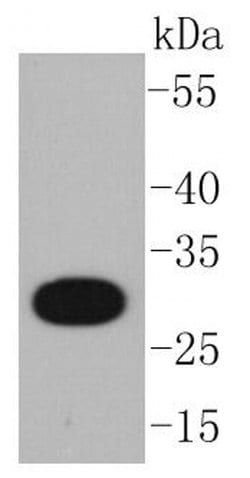
- CD20 is a non-glycosylated surface phosphoprotein that has a molecular weight range of 33-37 kDa depending on the degree of phosphorylation
- CD20 is expressed on mature and most malignant B cells, in a subpopulation of T lymphocytes and follicular dendritic cells
- CD20 expression on B cells is synchronous with the expression of surface IgM and it regulates transmembrane calcium conductance, cell cycle progression and B-cell proliferation
- CD20 is also associated with lipid rafts, but the intensity of this association depends on extracellular triggering, employing CD20 conformational change, and/or BCR (B cell antigen receptor) aggregation
- After the receptor ligation, BCR and CD20 colocalize and then rapidly dissociate before BCR endocytosis, whereas CD20 remains at the cell surface
- CD20 serves as a useful target for antibody-mediated therapeutic depletion of B cells, as it is expressed at high levels on most B-cell malignancies, but does not become internalized or shed from the plasma membrane following monoclonal antibody treatment
- Diseases associated with CD20 dysfunction include Ms4a1-related common variable immune deficiency.