CD20 Recombinant Rabbit Monoclonal Antibody (SY12-01), Invitrogen™
Manufacturer: Thermo Scientific
Select a Size
| Pack Size | SKU | Availability | Price |
|---|---|---|---|
| Each of 1 | PIMA532050-Each-of-1 | In Stock | ₹ 47,481.50 |
PIMA532050 - Each of 1
In Stock
Quantity
1
Base Price: ₹ 47,481.50
GST (18%): ₹ 8,546.67
Total Price: ₹ 56,028.17
Antigen
CD20
Classification
Monoclonal
Concentration
1 mg/mL
Formulation
TBS with 0.05% BSA, 40% Glycerol and 0.05% sodium azide, pH 7.4
Gene Accession No.
P11836
Gene Symbols
Ms4a1
Immunogen
Synthetic peptide within Human CD20 aa 248-297
Quantity
100 μL
Primary or Secondary
Primary
Target Species
Human, Non-human Primate
Product Type
Antibody
Isotype
IgG
Applications
Immunocytochemistry, Immunohistochemistry (Paraffin), Western Blot
Clone
SY12-01
Conjugate
Unconjugated
Gene
Ms4a1
Gene Alias
AA960661, APY, ATOPY, B1, B-cell differentiation antigen Ly-44, B-lymphocyte antigen CD20, B-lymphocyte cell-surface antigen B1, B-lymphocyte surface antigen B1, Bp35, Cd20, CD20 antigen, CD20 cell surface protein, CD20 receptor, CVID5, EGK_06167, Fc epsilon receptor I beta chain, Fc Fragment of IgE high affinity I receptor for beta polypeptide, FCER1B, High affinity immunoglobulin epsilon receptor subunit beta, IgE Fc receptor subunit beta, IGEL, IGER, IGHER, LEU16, LEU-16, Leukocyte surface antigen Leu-16, Ly44, Ly-44, Lymphocyte antigen 44, membrane spanning 4-domains A1, membrane-spanning 4-domains subfamily A member 1, membrane-spanning 4-domains, subfamily A, member 1, membrane-spanning 4-domains, subfamily A, member 2, MGC3969, MS4A1, MS4A2, S7
Host Species
Rabbit
Purification Method
Protein A
Regulatory Status
RUO
Gene ID (Entrez)
931
Content And Storage
Store at 4°C short term. For long term storage, store at -20°C, avoiding freeze/thaw cycles.
Form
Liquid
Related Products
Description
- Recombinant rabbit monoclonal antibodies are produced using in vitro expression systems
- The expression systems are developed by cloning in the specific antibody DNA sequences from immunoreactive rabbits
- Then, individual clones are screened to select the best candidates for production
- The advantages of using recombinant rabbit monoclonal antibodies include: better specificity and sensitivity, lot-to-lot consistency, animal origin-free formulations, and broader immunoreactivity to diverse targets due to larger rabbit immune repertoire
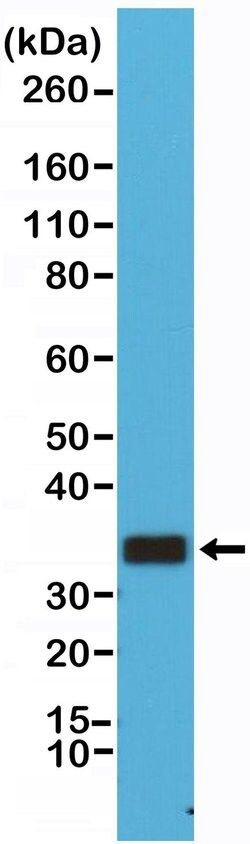
- CD20 is a non-glycosylated surface phosphoprotein that has a molecular weight range of 33-37 kDa depending on the degree of phosphorylation
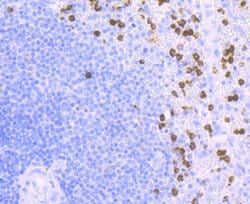
- CD20 is expressed on mature and most malignant B cells, in a subpopulation of T lymphocytes and follicular dendritic cells
- CD20 expression on B cells is synchronous with the expression of surface IgM and it regulates transmembrane calcium conductance, cell cycle progression and B-cell proliferation
- CD20 is also associated with lipid rafts, but the intensity of this association depends on extracellular triggering, employing CD20 conformational change, and/or BCR (B cell antigen receptor) aggregation
- After the receptor ligation, BCR and CD20 colocalize and then rapidly dissociate before BCR endocytosis, whereas CD20 remains at the cell surface
- CD20 serves as a useful target for antibody-mediated therapeutic depletion of B cells, as it is expressed at high levels on most B-cell malignancies, but does not become internalized or shed from the plasma membrane following monoclonal antibody treatment
- Diseases associated with CD20 dysfunction include Ms4a1-related common variable immune deficiency.