PIMA534637
PRKD2 Recombinant Rabbit Monoclonal Antibody (JU08-33), Invitrogen™
Manufacturer: Thermo Scientific
Select a Size
| Pack Size | SKU | Availability | Price |
|---|---|---|---|
| Each of 1 | PIMA534637-Each-of-1 | In Stock | ₹ 47,481.50 |
PIMA534637 - Each of 1
In Stock
Quantity
1
Base Price: ₹ 47,481.50
GST (18%): ₹ 8,546.67
Total Price: ₹ 56,028.17
Antigen
PRKD2
Classification
Monoclonal
Concentration
1 mg/mL
Formulation
TBS with 0.05% BSA, 40% glycerol and 0.05% sodium azide; pH 7.4
Gene Accession No.
Q9BZL6
Gene Symbols
PRKD2
Immunogen
Recombinant protein within Human Protein Kinase D2 aa 181-306
Quantity
100 μL
Primary or Secondary
Primary
Target Species
Human
Product Type
Antibody
Isotype
IgG
Applications
Flow Cytometry, Immunocytochemistry, Immunohistochemistry (Paraffin), Western Blot
Clone
JU08-33
Conjugate
Unconjugated
Gene
PRKD2
Gene Alias
AI325941; HSPC187; nPKC-D2; PKD2; Prkd2; protein kinase D2; RGD1308054; serine/threonine-protein kinase D2
Host Species
Rabbit
Purification Method
Protein A
Regulatory Status
RUO
Gene ID (Entrez)
25865
Content And Storage
-20° C, Avoid Freeze/Thaw Cycles, store in dark
Form
Liquid
Related Products
Description
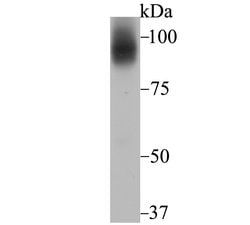
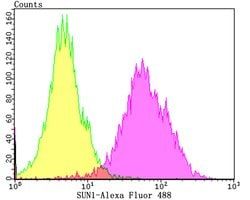
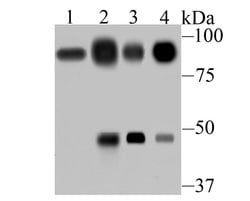
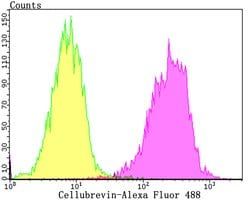
- Positive Control: A549, SH-SY-5Y, human tonsil tissue
- PRKD2 (PKD2) is a member of the protein kinase D serine/threonine protein kinase family
- PRKD2 is a component in the signal transduction pathway induced by phorbol esters and the CCK b gastrin receptor
- It exhibits the strongest homology to the serine threonine protein kinases PKD/PKC and PKCnu, particularly in the duplex zinc finger-like cysteine-rich motif, in the pleckstrin homology domain and in the protein kinase domain
- In contrast, it shows only a low degree of sequence similarity to other members of the PKC family.