PIMA534765
LPIN1 Recombinant Rabbit Monoclonal Antibody (JG37-69), Invitrogen™
Manufacturer: Thermo Scientific
Select a Size
| Pack Size | SKU | Availability | Price |
|---|---|---|---|
| Each of 1 | PIMA534765-Each-of-1 | In Stock | ₹ 47,481.50 |
PIMA534765 - Each of 1
In Stock
Quantity
1
Base Price: ₹ 47,481.50
GST (18%): ₹ 8,546.67
Total Price: ₹ 56,028.17
Antigen
LPIN1
Classification
Monoclonal
Concentration
1.0 mg/mL
Formulation
TBS with 0.05% BSA, 40% glycerol and 0.05% sodium azide; pH 7.4
Gene Accession No.
Q14693
Gene Symbols
LPIN1
Immunogen
Recombinant protein within Human Lipin 1 aa 81-220
Quantity
100 μL
Primary or Secondary
Primary
Target Species
Human
Product Type
Antibody
Isotype
IgG
Applications
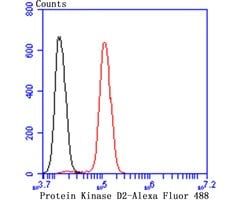
Flow Cytometry, Immunocytochemistry, Immunohistochemistry (Paraffin), Western Blot
Clone
JG37-69
Conjugate
Unconjugated
Gene
LPIN1
Gene Alias
4631420P06; DKFZp781P1796; Fatty liver dystrophy protein; Fld; KIAA0188; lipin 1; Lipin1; lipin-1; LPIN1; mKIAA0188; PAP1; Phosphatidate phosphatase LPIN1
Host Species
Rabbit
Purification Method
Protein A
Regulatory Status
RUO
Gene ID (Entrez)
23175
Content And Storage
-20° C, Avoid Freeze/Thaw Cycles, store in dark
Form
Liquid
Related Products
Description
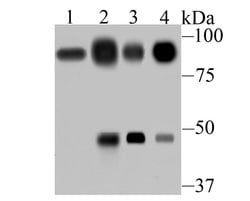
- Positive Control: K562, SH-SY-5Y, HUVEC, PC-3M, human liver cancer tissue, human colon tissue, human skeletal muscle tissue
- The Lipin family of nuclear proteins contains three members: Lipin-1, Lipin-2 and Lipin-3, all of which contain a nuclear signal sequence, a highly conserved amino-terminal (NLIP) domain and a carboxy-terminal (CLIP) domain
- LPIN1 (Lipin-1) is crucial for normal adipose tissue development and metabolism
- LPIN1 selectively activates a subset of PGC-1A; target pathways, including fatty acid oxidation and mitochondrial oxidative phosphorylation by inducing expression of the nuclear receptor PPARA
- LPIN1 also inactivates the lipogenic program and suppresses circulating lipid levels
- An abundance of LPIN1 promotes fat accumulation and insulin sensitivity, whereas a deficiency in LPIN1 may deter normal adipose tissue development, resulting in insulin resistance and lipodystrophy, a heterogeneous group of disorders characterized by loss of body fat, fatty liver, hypertriglyceridemia and insulin resistance.