PIMA534780
XDH Recombinant Rabbit Monoclonal Antibody (JG38-40), Invitrogen™
Manufacturer: Thermo Scientific
Select a Size
| Pack Size | SKU | Availability | Price |
|---|---|---|---|
| Each of 1 | PIMA534780-Each-of-1 | In Stock | ₹ 46,947.50 |
PIMA534780 - Each of 1
In Stock
Quantity
1
Base Price: ₹ 46,947.50
GST (18%): ₹ 8,450.55
Total Price: ₹ 55,398.05
Antigen
XDH
Classification
Monoclonal
Concentration
1 mg/mL
Formulation
TBS with 0.05% BSA, 40% glycerol and 0.05% sodium azide; pH 7.4
Gene Accession No.
P47989
Gene Symbols
XDH
Immunogen
Recombinant protein within Human Xanthine Oxidase aa 182-313
Quantity
100 μL
Primary or Secondary
Primary
Target Species
Human
Product Type
Antibody
Isotype
IgG
Applications
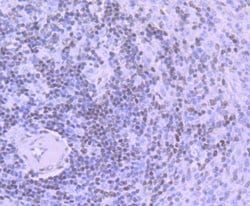
Immunohistochemistry (Paraffin), Western Blot
Clone
JG38-40
Conjugate
Unconjugated
Gene
XDH
Gene Alias
Unknown (protein for MGC:127098); xanthine dehydrogenase; Xanthine dehydrogenase/oxidase; xanthine oxidase; Xanthine oxidoreductase; XD; Xdh; xdh antibody; XDHA; xdha antibody; XO; XOR; xor antibody; Xox1; Xox-1
Host Species
Rabbit
Purification Method
Protein A
Regulatory Status
RUO
Gene ID (Entrez)
7498
Content And Storage
-20° C, Avoid Freeze/Thaw Cycles, store in dark
Form
Liquid
Related Products
Description
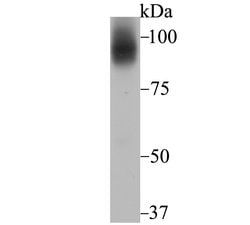
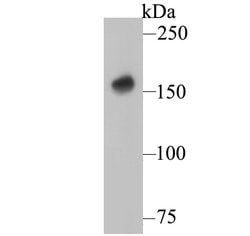
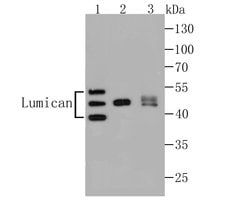
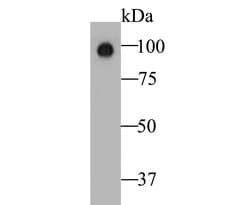
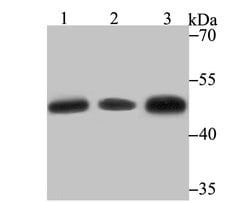
- Positive Control: Human kidney tissue lysate, rat liver tissue, human liver tissue, mouse liver tissue
- XDH belongs to the group of molybdenum-containing hydroxylases involved in the oxidative metabolism of purines
- The enzyme is a homodimer
- This protein can be converted to xanthine oxidase by reversible sulfhydryl oxidation or by irreversible proteolytic modification
- Defects in xanthine dehydrogenase cause xanthinuria, may contribute to adult respiratory stress syndrome, and may potentiate influenza infection through an oxygen metabolite-dependent mechanism.