ADORA1 Recombinant Rabbit Monoclonal Antibody (ARC1987), Invitrogen™
Manufacturer: Thermo Scientific
Select a Size
| Pack Size | SKU | Availability | Price |
|---|---|---|---|
| Each of 1 | PIMA538140-Each-of-1 | In Stock | ₹ 48,371.50 |
PIMA538140 - Each of 1
In Stock
Quantity
1
Base Price: ₹ 48,371.50
GST (18%): ₹ 8,706.87
Total Price: ₹ 57,078.37
Antigen
ADORA1
Classification
Recombinant Monoclonal
Concentration
1 mg/mL
Formulation
PBS with 0.05% BSA, 50% glycerol and 0.02% sodium azide; pH 7.3
Gene Accession No.
P25099, P30542, Q60612
Gene Symbols
ADORA1
Immunogen
A synthetic peptide corresponding to a sequence within amino acids 100-200 of human ADORA1 (P30542)
Quantity
100 μL
Primary or Secondary
Primary
Target Species
Human, Mouse, Rat
Product Type
Antibody
Isotype
IgG
Applications
Immunohistochemistry (Paraffin), Western Blot
Clone
ARC1987
Conjugate
Unconjugated
Gene
ADORA1
Gene Alias
A1AR; A1-AR; A1R; AA1R; adenosine A1 receptor; adenosine A1 receptor variant 1; adenosine A1 receptor variant 2; adenosine receptor A1; ADO-A1 receptor; ADORA1; AI848715; AR; BB176431; RDC7; Ri
Host Species
Rabbit
Purification Method
Affinity chromatography
Regulatory Status
RUO
Gene ID (Entrez)
11539, 134, 29290
Content And Storage
-20° C, Avoid Freeze/Thaw Cycles
Form
Liquid
Related Products
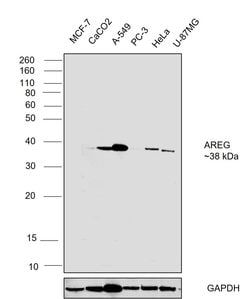
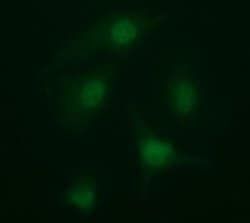
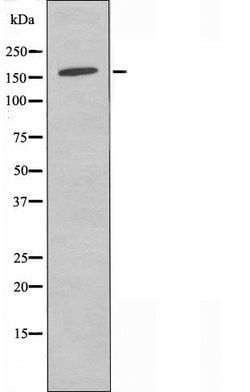
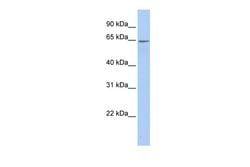
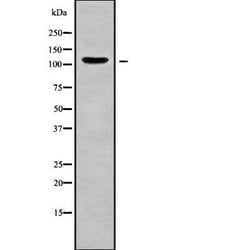

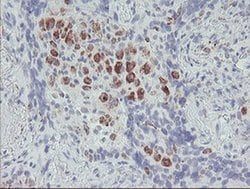
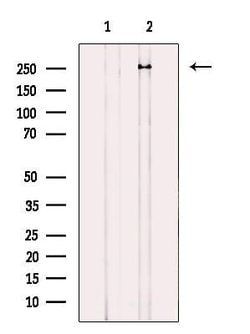
Description
- Positive Samples: Raji, SH-SY5Y, Mouse liver, Mouse testis Immunogen sequence: AIAVDRYLRV KIPLRYKMVV TPRRAAVAIA GCWILSFVVG LTPMFGWNNL SAVERAWAAN GSMGEPVIKC EFEKVISMEY MVYFNFFVWV LPPLLLMVLI Y Adenosine receptors (ARs) are members of the 7-transmembrane domain G-protein-coupled receptor superfamily
- Structural, biochemical and pharmacological analyses of the AR genes and protein has led to the discovery of four distinct AR subtypes (A1, A2a, A2b, A3)
- Activation of ARs mediates several receptor subtype-specific physiological processes that include cardiac rate, smooth muscle tone, platelet aggregation, inflammation, cell growth and death, and neurotransmission
- The A1AR is a glycoprotein that can activate Gi and Go proteins in vitro
- In intact cells, agonist occupation of the A1AR has been shown to cause pertussis toxin-sensitive inhibition of adenylyl cyclase activity and, in some systems, a stimulation of phospholipase C resulting in mobilization of intracellular calcium stores
- Activation of potassium channels by A1AR has been intensively studied in relation to its dramatic effects on the cardiovascular system
- A1AR protein is highly expressed in brain (especially cerebellum, hippocampus, thalamus, and cortex) and spinal cord and in part, modulates neurotransmitter release
- In white adipocytes A1AR inhibits lipolysis and stimulates glucose uptake
- Other tissues also express A1AR including kidney and testis.