PIPA5103603
AMOT Polyclonal Antibody, Invitrogen™
Manufacturer: Thermo Scientific
Select a Size
| Pack Size | SKU | Availability | Price |
|---|---|---|---|
| Each of 1 | PIPA5103603-Each-of-1 | In Stock | ₹ 46,502.50 |
PIPA5103603 - Each of 1
In Stock
Quantity
1
Base Price: ₹ 46,502.50
GST (18%): ₹ 8,370.45
Total Price: ₹ 54,872.95
Antigen
AMOT
Classification
Polyclonal
Conjugate
Unconjugated
Gene
AMOT
Gene Alias
AMOT; Angiomotin; angiomotin p130 isoform; angiomotin p80 isoform; CAG-2; D0Kist1; KIAA1071; RGD1564027; si:dkey-13f9.6; Sii6; wu:fj21a07
Host Species
Rabbit
Purification Method
Affinity chromatography
Regulatory Status
RUO
Gene ID (Entrez)
154796, 27494
Content And Storage
-20°C
Form
Liquid
Applications
Immunocytochemistry, Immunohistochemistry (Paraffin), Western Blot
Concentration
1 mg/mL
Formulation
PBS with 50% glycerol and 0.02% sodium azide; pH 7.4
Gene Accession No.
Q4VCS5, Q8VHG2
Gene Symbols
AMOT
Immunogen
A synthesized peptide derived from human AMOT(Accession Q4VCS5), corresponding to amino acid residues Y836-P886.
Quantity
100 μL
Primary or Secondary
Primary
Target Species
Human, Mouse
Product Type
Antibody
Isotype
IgG
Related Products
Description
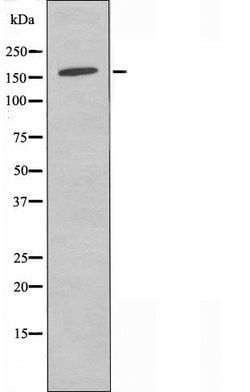
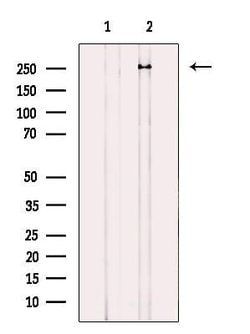
- Antibody detects endogenous levels of total AMOT
- AMOT (Angiomotin) belongs to the motin family of angiostatin binding proteins characterized by conserved coiled-coil domains and C-terminal PDZ binding motifs
- AMOT plays a central role in tight junction maintenance via the complex formed with ARHGAP17 - which acts by regulating the uptake of polarity proteins at tight junctions
- AMOT is expressed predominantly in endothelial cells of capillaries as well as larger vessels of the placenta where it may mediate the inhibitory effect of angiostatin on tube formation and the migration of endothelial cells toward growth factors during the formation of new blood vessels.