IRF4 Monoclonal Antibody (A7C12), Invitrogen™
Manufacturer: Thermo Scientific
Select a Size
| Pack Size | SKU | Availability | Price |
|---|---|---|---|
| Each of 1 | PIMA544949-Each-of-1 | In Stock | ₹ 42,720.00 |
PIMA544949 - Each of 1
In Stock
Quantity
1
Base Price: ₹ 42,720.00
GST (18%): ₹ 7,689.60
Total Price: ₹ 50,409.60
Antigen
IRF4
Classification
Monoclonal
Concentration
2 mg/mL
Formulation
PBS with 0.1% BSA, 40% glycerol and 0.05% sodium azide; pH 7.4
Gene Accession No.
Q15306
Gene Symbols
IRF4
Immunogen
Synthetic peptide within human MUM1 aa 402-451/451.
Quantity
100 μL
Primary or Secondary
Primary
Target Species
Human
Form
Liquid
Applications
Immunohistochemistry (Paraffin)
Clone
A7C12
Conjugate
Unconjugated
Gene
IRF4
Gene Alias
AI385587; interferon regulatory factor 4; Irf4; IRF-4; LSIRF; Lymphocyte-specific interferon regulatory factor; multiple myeloma oncogene 1; MUM1; NF-EM5; PU.1 interaction partner; Sfpi1/PU.1 interaction partner; SHEP8; Spip; Transcriptional activator PIP
Host Species
Mouse
Purification Method
Protein G
Regulatory Status
RUO
Gene ID (Entrez)
3662
Content And Storage
Store at 4°C short term. For long term storage, store at -20°C, avoiding freeze/thaw cycles.
Isotype
IgG1
Related Products

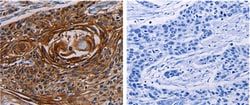
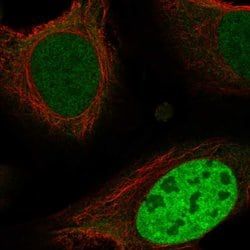
Description
- The IRF (interferon regulatory factor) family of transcription factors are characterized by an unique tryptophan pentad repeat DNA-binding domain
- The IRFs are important in the regulation of interferons in response to infection by virus, and in the regulation of interferon-inducible genes
- IRF4 is lymphocyte specific and negatively regulates toll-like-receptor (TLR) signaling that is central to the activation of innate and adaptive immune systems
- A chromosomal translocation involving this gene and the IgH locus, t(6;14)(p25;q32), may be a cause of multiple myeloma
- Alternatively spliced transcript variants have been found.