SLIRP Polyclonal Antibody, Invitrogen™
Manufacturer: Thermo Scientific
Select a Size
| Pack Size | SKU | Availability | Price |
|---|---|---|---|
| Each of 1 | PIPA146148-Each-of-1 | In Stock | ₹ 48,905.50 |
PIPA146148 - Each of 1
In Stock
Quantity
1
Base Price: ₹ 48,905.50
GST (18%): ₹ 8,802.99
Total Price: ₹ 57,708.49
Antigen
SLIRP
Classification
Polyclonal
Conjugate
Unconjugated
Gene
SLIRP
Gene Alias
1810035L17Rik; C14orf156; DC23; DC50; PD04872; SLIRP; SRA stem-loop interacting RNA binding protein; SRA stem-loop-interacting RNA-binding protein, mitochondrial
Host Species
Rabbit
Purification Method
Antigen affinity chromatography
Regulatory Status
RUO
Gene ID (Entrez)
380773, 81892
Content And Storage
Store at 4°C short term. For long term storage, store at -20°C, avoiding freeze/thaw cycles.
Form
Liquid
Applications
Immunocytochemistry, Immunohistochemistry (Paraffin), Western Blot
Concentration
1 mg/mL
Formulation
PBS with 0.05% sodium azide
Gene Accession No.
Q9D8T7, Q9GZT3
Gene Symbols
SLIRP
Immunogen
A synthetic peptide made to C-terminal region of Human SLIRP protein.
Quantity
100 μL
Primary or Secondary
Primary
Target Species
Human, Mouse, Non-human Primate
Product Type
Antibody
Isotype
IgG
Related Products
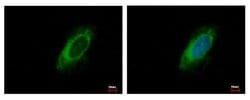
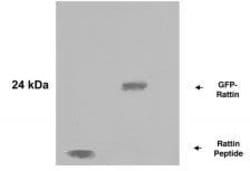

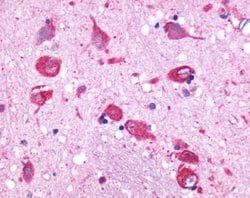
Description
- Prior to immunostaining paraffin tissues, antigen retrieval with sodium citrate buffer (pH 6.0) is recommended
- Suggested positive control: antigen standard for C14orf156 (transient overexpression lysate), human liver protein
- SLIRP (SRA stem-loop interacting RNA binding protein) is expressed in normal and tumor tissues, but the majority of the endogenous SLIRP resides in the mitochondria
- SLIRP may regulate mitochondrial functions and has the potential to shut down estrogen in breast cancer cells and testosterone in prostate cancer cells
- SLIRP has also been shown to turn down genes involved in energy metabolism.